

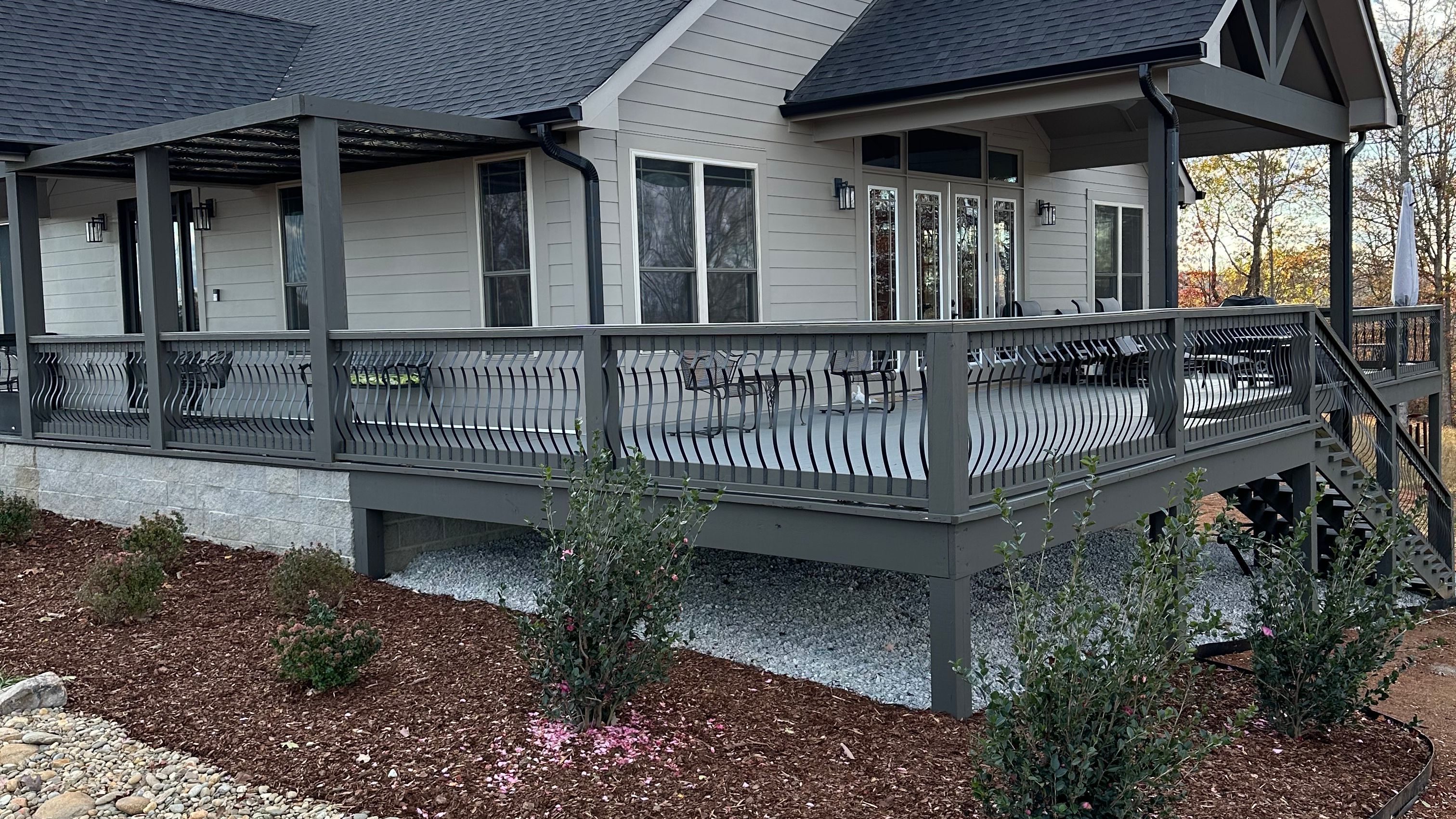
Outdoor spaces in Oak Ridge should not disappear when the sun goes down. The right landscape lighting makes a yard safer for family and guests, helps customers feel welcome at a storefront, and adds a finished look to patios, walkways, and plant beds. We design and install outdoor lighting across East Tennessee, and we see the same pattern over and over, most people want more visibility at night, but they do not want harsh floodlights or a “runway” of fixtures.
In this guide to landscape lighting in Oak Ridge TN, we will walk through the basics that make the biggest difference: pathway lighting installation, step and wall lighting, accent lighting for trees and beds, and outdoor security lighting that actually improves safety without blasting the whole neighborhood. We will also cover common fixture types, how low voltage landscape lighting works, placement tips we use in real projects, and how lighting ties into hardscapes like patios and retaining walls.
If you are planning a new outdoor living space or just tired of walking to the trash cans in the dark, these ideas will help you build a lighting plan that looks great, performs well in East Tennessee weather, and feels intentional instead of pieced together.
Start with a lighting plan, not a pile of fixtures
Most lighting problems we fix in the field come from skipping the plan. Homeowners buy a few lights, install them where it feels convenient, then realize the yard still has dark zones, glare, or cords and transformers in awkward places. A simple plan avoids that and usually lowers the total number of fixtures needed.
Define the three goals: safety, use, and appearance
We like to map lighting needs into three buckets:
- Safety lighting for walking surfaces, elevation changes, and trip hazards.
- Usability lighting for areas you actively use at night, like patios, grills, seating, and gates.
- Appearance lighting that highlights the best parts of the landscape, like specimen trees, stonework, and layered plant beds.
In Oak Ridge, we often see a mix of wooded lots, sloped yards, and mature trees. That means shadows can be dramatic, and a single bright light can create deep contrast. A better approach is layering multiple lower output fixtures, aimed carefully, so the eye can move comfortably through the space.
Walk the property at dusk and again after dark
This is one of the most practical steps you can take before choosing fixtures. We do it on-site when possible, because the same yard looks completely different at 8 p.m. than it does at noon.
- Identify where you naturally walk, including from the driveway to the front door, side gates, trash area, and any path to a detached garage or shed.
- Look for steps, curbs, and uneven transitions that disappear in low light.
- Note where you want to spend time, like a patio seating wall, fire pit, or hot tub.
- Mark where glare would be annoying, such as lights shining into a neighbor’s window or into your own living room.
Choose the right system: low voltage vs line voltage
For most residential projects, low voltage landscape lighting is the standard. It uses a transformer to step down household power to 12 volts, which is safer around landscaping and easier to expand over time. Line voltage can be appropriate in certain commercial or large-scale applications, but it typically requires more intensive electrical work.
When we install LED landscape lighting in Tennessee, we focus on quality components, proper wire sizing, and weatherproof connections. Those details matter in our climate, where humidity, clay soils, and seasonal freeze-thaw cycles can stress cheap connectors and shallow-buried wire.
If you are already planning outdoor upgrades, it is smart to coordinate lighting with your landscape and hardscape layout. That is one reason many Oak Ridge clients bundle lighting with our Landscaping or Hardscaping work, so conduit paths, bed edges, and wall caps are built with lighting in mind.
Pathway lighting installation that feels natural (and actually helps you see)
Path lights are the most requested feature we hear when someone asks for outdoor lighting ideas for a yard. Done well, they guide movement and reduce trips. Done poorly, they create glare and make it harder to see because your eyes keep adjusting to bright points.
Best practices for path lights in Oak Ridge yards
Here is what we aim for on most walkways:
- Stagger fixtures from side to side instead of lining them up like fence posts.
- Place lights just off the walking surface, not in the middle of the bed where plants will swallow them.
- Use shielded or downcast fixtures to keep light on the path, not in your eyes.
- Avoid over-lighting. Often, fewer fixtures with better placement looks more upscale and is easier to maintain.
Use the right color temperature
Many people buy the brightest, coolest bulbs available, then wonder why the yard looks harsh. For most homes, we recommend warm white lighting in the 2700K to 3000K range. It complements brick, stone, and wood, and it feels comfortable for outdoor living.
Cooler temperatures can make sense for certain security applications, but for everyday pathway lighting installation, warm tones typically look better and reduce the “spotlight” effect.
Think beyond the front walk
In Oak Ridge, we often add path lighting to:
- Side-yard gates and fence openings
- Walks to a backyard patio
- Routes to a garden or raised beds
- Driveway edges where the grade drops into grass
If you maintain a property year-round, make sure those routes stay visible even when leaves drop and shadows change. That is where a seasonal check, which we can fold into Property Maintenance, helps keep fixtures aimed correctly and lenses clean.
Step and wall lighting: the safest upgrade you can make
If you have steps, retaining walls, or a raised patio, step lighting is one of the highest value additions you can make. It is also one of the most overlooked. We see plenty of beautiful hardscapes that become risky at night because the edges disappear.
Where step lighting matters most
Prioritize these areas first:
- Any set of 2 or more steps from a driveway to a porch
- Transitions from a patio to a lawn
- Steps leading to a basement door or side entry
- Changes in elevation near a pool, fire pit, or seating area
In East Tennessee, moisture and algae can make stone and concrete slick. Lighting does not change traction, but it helps people place their feet with confidence, especially when carrying food, taking out trash, or walking a dog.
Fixture types that work well on steps and walls
- Recessed step lights installed in risers or wall faces
- Under-cap lights mounted beneath wall caps for a clean, hidden look
- Hardscape lights designed to tuck under coping or cap stones
For hardscape lighting for patios, under-cap lights are a favorite because they wash light down the wall and onto the walking surface without glare. If you are building or renovating a patio, it is much easier to plan these during construction. If you are considering a new patio or a rebuild, our Hardscaping team can help you think through lighting before the first paver or block goes in.
Placement tips we use in real installs
- Aim for consistent illumination on each tread, not hot spots on one step and darkness on the next.
- Keep lights out of direct sightlines from seating areas.
- Use multiple low output fixtures rather than one overly bright source.
- Consider glare from inside the home. A light that looks fine from the yard can be distracting through a kitchen window.
Accent lighting: highlight trees, stone, and plant beds without overdoing it
Accent lighting is where a yard starts to feel designed. Instead of lighting everything, you choose a few features that deserve attention, then layer soft light around them.
What to accent in Oak Ridge landscapes
Some of the best targets we see locally:
- Mature oaks, maples, and ornamental trees near patios
- Stone retaining walls, boulder features, and natural outcroppings
- Entry landscaping around pillars or address markers
- Layered plant beds with year-round structure (evergreens, ornamental grasses, and shrubs)
If your plant beds are still evolving, it helps to choose plants that hold their shape and color through our seasons. Our guide on Native Plants for East TN: Low-Maintenance Landscape Picks pairs well with lighting planning because the best-lit landscapes have strong “bones” even in winter.
Techniques: uplighting, downlighting, and moonlighting
- Uplighting places a fixture at the base of a tree or feature and aims upward. It is dramatic, but it needs careful aiming to avoid glare.
- Downlighting mounts a light higher up (often in a tree) and aims down. It can look natural, like moonlight, and it is excellent for patios and seating areas.
- Grazing and washing use light to skim across a textured surface like stone, bringing out depth.
We often combine one focal uplight with softer surrounding lights. For example, a single accent light on a Japanese maple near the patio, paired with subtle path lights and under-cap lighting on the seating wall.
Keep maintenance in mind
Plants grow, mulch shifts, and leaves fall. Accent lights need occasional adjustment. When we install systems for Oak Ridge clients, we plan for access, cable routing, and fixture durability, so you are not digging up beds every season.
Outdoor security lighting that improves safety without harsh glare
Security lighting is important, but brighter is not always safer. Overly bright lights create strong shadows where someone can hide, and they can reduce visibility because your eyes struggle to adapt.
Layer security lighting with practical coverage
For homes and small businesses, we typically look at:
- Driveway and parking areas
- Side doors and garage entries
- Back doors and basement doors
- Gate access points
- Dark corners where the house meets a fence line
Use shielded fixtures and smart controls
Shielded fixtures reduce glare and keep light where it belongs. Smart controls and timers help ensure lights are on when needed and off when not.
- Dusk to bedtime for patio and accent lighting
- Dusk to dawn for minimal pathway lighting in key areas
- Motion-activated for side yard and rear access points
If you are a small business, consistent lighting around entrances and walkways helps customers feel comfortable and can reduce slip-and-fall risk. Always check local requirements for commercial sites, and if you are unsure, we can help you plan a system that balances safety, aesthetics, and efficiency.
Fixture types and what they are best for
Choosing fixtures is easier once you know the job each light needs to do. Here are the common types we use, and where they shine.
Path lights
Best for walkways, driveway edges, and garden paths. Look for downcast designs and durable finishes.
Spotlights and well lights
Best for accenting trees, stone features, and architectural details. Well lights sit flush with grade, which can look clean, but they need thoughtful placement to avoid water pooling and to prevent glare.
Flood lights
Best used sparingly for broad coverage, often for security. We prefer controlled beam spreads rather than wide, uncontrolled glare.
Step and hardscape lights
Best for stairs, retaining walls, seat walls, and patio edges. These are the go-to for hardscape lighting for patios.
Deck and rail lights
Great for decks, handrails, and transitions from a deck to a yard. These improve safety without lighting up the whole space.
String lights (bistro lights)
Best for ambiance over patios and seating areas. Use them as a decorative layer, not as your only functional lighting.
LED considerations
LED landscape lighting is the standard today because it is efficient and long-lasting. Focus on quality drivers, stable color temperature, and fixtures rated for outdoor use. Cheap LEDs can shift color over time or fail early, especially with moisture exposure.
Placement tips that make lighting look professional
Good lighting is more about placement than it is about brightness. Here are the field-tested tips we use to make a system look intentional.
Avoid glare at eye level
If you can see the bulb from where you stand or sit, you will probably feel glare. Use shields, aim fixtures away from sightlines, and choose lower output lights where people gather.
Create a “rhythm” of light and dark
Not every square foot needs light. A yard looks more natural when you guide the eye with highlights and let some areas remain softly lit or dark.
Light the destination, not just the route
It is common to light the path to the patio, then leave the patio itself dim. Add subtle downlighting, hardscape lights, or a focused task light near the grill so the space is usable.
Coordinate with drainage and irrigation
In East Tennessee clay, water movement matters. We route wire and place fixtures with drainage in mind, so water does not pool around connections. If you have irrigation, we also avoid placing fixtures where sprinkler heads will constantly spray lenses and cause mineral buildup.
Use the landscape to hide the hardware
How lighting complements patios, walkways, and plant beds
Lighting works best when it is part of the overall outdoor design. If you already have a patio, walkway, or planting plan, lighting can elevate it. If you are building new, lighting can be integrated from the start.
Patios and outdoor living zones
For patios, we aim for three layers:
- Task lighting near grills, outdoor kitchens, and doorways
- Ambient lighting for general comfort, often from downlighting or wall lighting
- Accent lighting to highlight nearby trees, stonework, or planting beds
If your patio is pavers or includes seat walls, hardscape lighting for patios can be integrated neatly under caps or along edges. This helps define the space and improves safety when people move between seating, steps, and the yard.
Walkways and entries
If you are in Oak Ridge and want a system that feels cohesive from the street to the backyard, we can help as part of our local service in Oak Ridge.
Plant beds and landscape layers
Plant bed lighting works best when the bed has structure. Evergreens, ornamental trees, and layered heights give you something to light year-round. If you are refreshing beds, consider pairing lighting with a broader Landscaping update so plant placement and lighting placement support each other.
A realistic example: a safer Oak Ridge backyard without turning it into a stadium
- Under-cap hardscape lights along the retaining wall to wash light onto the patio edge
- Two recessed step lights to define the stair treads
- A staggered run of path lights along the side walkway to the gate
- One or two accent uplights on a mature tree to give the yard depth
- A motion-activated security light at the back door, aimed down and shielded
This kind of layered plan improves safety, makes the patio usable, and adds curb appeal without relying on a single bright fixture. It also keeps long-term maintenance reasonable because fixtures are placed where they can be accessed and adjusted.
Installation and maintenance notes (what we wish every homeowner knew)
Outdoor lighting is straightforward when it is installed correctly, but small shortcuts cause most of the failures we see.
Bury wire properly and use waterproof connections
Low voltage systems still need professional-grade connections. Moisture intrusion is the enemy. We use weather-rated connectors and plan wire routes to minimize splices.
Size the transformer and wire for the load
Voltage drop is real. If the run is long or the fixture count grows, lights at the end can look dim. Proper wire gauge, thoughtful circuit layout, and transformer sizing keep brightness consistent.
Plan for future expansion
Many homeowners start with the front walk, then add the patio later. We like to leave room in the transformer and plan routing so adding fixtures does not mean redoing the whole system.
Keep lenses clean and fixtures aimed
Pollen, mulch, and mowing debris can cloud lenses. A quick seasonal clean and re-aim keeps the system looking sharp. If you already use us for Property Maintenance, lighting checkups can be part of keeping the whole outdoor space dialed in.
Note: Any line voltage work should be handled by a qualified professional and must follow applicable electrical codes and permitting requirements. We can coordinate with the appropriate trades when a project requires it.
Conclusion: make your yard safer, more inviting, and easier to use at night
The best outdoor lighting ideas for a yard come down to layered, purposeful light. Start with safe movement using pathway and step lighting, add usability for patios and entries, then finish with accent lighting that highlights trees, stone, and plant beds. In Oak Ridge, a thoughtful low voltage LED system can improve curb appeal, reduce trip hazards, and make your outdoor living space feel like an extension of your home.
If you are ready to plan landscape lighting in Oak Ridge TN, we would love to help. We are based in Kingston and work throughout the region, including Oak Ridge. Reach out through our website to schedule a site visit, and we will walk your property after dark, map the priorities, and recommend a lighting layout that fits your space and budget.


