

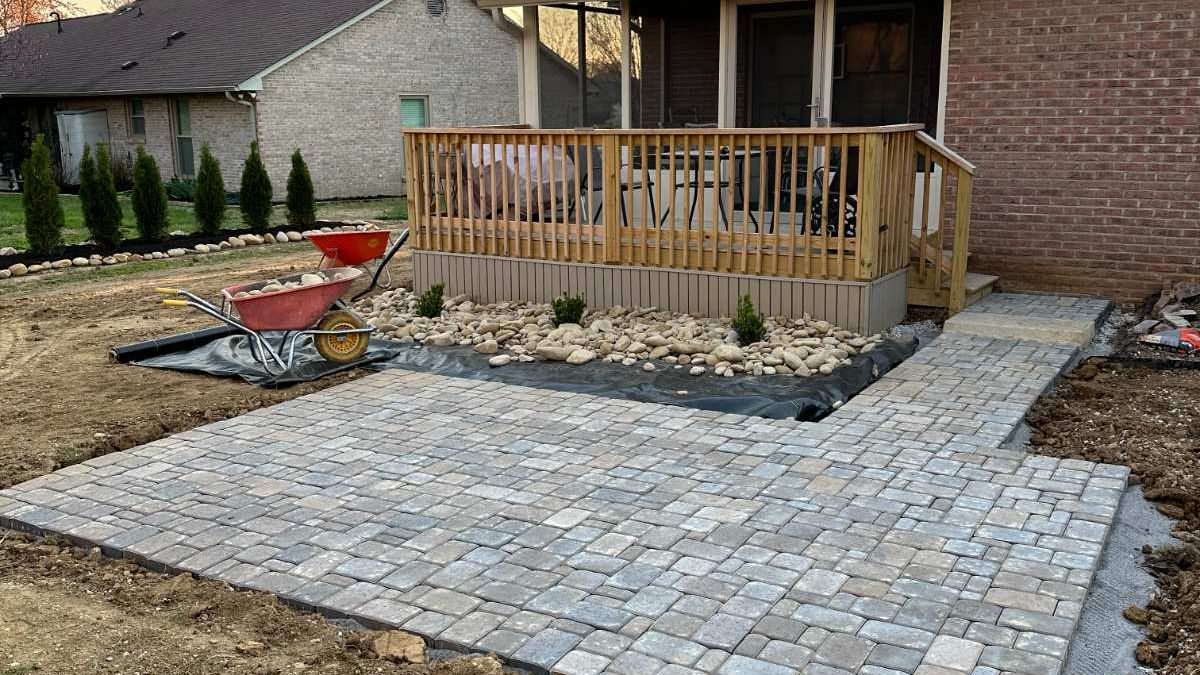
Choosing between gravel and pavers sounds simple until you factor in East Tennessee realities like heavy spring rains, clay soil, hillside lots, and freeze-thaw cycles. We build and repair walkways across Kingston and the surrounding area, and we see the same story play out: a walkway that looks great on day one can become messy, uneven, or weed-filled if the material and base are not matched to the site.
In this guide, we break down gravel vs pavers walkway options for East TN homeowners, including installation complexity, longevity, drainage performance, weed control, and the total cost of ownership. We will also share practical design tips we use every week, so you can choose confidently whether you are connecting a driveway to a front door, creating a garden path, or building a backyard route to a patio.
What East Tennessee walkways are up against
East Tennessee is not the easiest place for walkways, especially around Kingston, lake-adjacent neighborhoods, and properties with slopes. Before comparing materials, it helps to understand the conditions that drive performance.
Clay soil, compaction, and settling
- Low spots that hold water
- Frost heave in winter cold snaps
- Edge creep where the path slowly spreads
- Pavers that rock or gravel that migrates
Rainfall and runoff on sloped lots
We regularly plan for sudden downpours and long wet periods. On a slope, water will look for the easiest route, and an uncontained gravel path can become that route. That means ruts, washouts, and gravel in the lawn.
Freeze-thaw and de-icing habits
Even though East TN is milder than many states, we still see freeze-thaw cycles. Water that gets into the base and freezes can lift sections of a walkway. Homeowners also use de-icers near steps and entries, which can affect some materials and jointing products.
When we evaluate walkway materials in East Tennessee, we look at the whole system, not just the surface. Base depth, drainage strategy, edging, and maintenance expectations matter as much as the top layer.
Gravel vs pavers walkway, quick comparison for East TN
If you want a fast way to narrow the choice, here is how we see the tradeoffs on local properties.
Where gravel usually wins
Gravel is often a strong pick when you want:
- Lower upfront cost
- A softer, informal look for garden paths
- Fast installation, especially for long runs
- Permeable walkway options that let water pass through
With the right gravel type and proper edging, gravel can be a practical solution for secondary paths, side-yard access, and low-traffic areas.
Where pavers usually win
Pavers are typically the better fit when you want:
- A clean, finished look for front entry walkways
- Long-term durability and stability
- Better accessibility for strollers, carts, and mobility needs
- Easier spot repairs without redoing the whole walkway
Pavers also give you more control over grades, edges, and transitions at steps and landings, which is important on uneven terrain.
Installation complexity, what it really takes to do it right
Many walkway problems we fix come down to base prep. Both gravel and pavers can fail if the base is rushed, underbuilt, or not graded for drainage.
Gravel walkway installation, simple does not mean sloppy
- Excavation to remove organic topsoil and create a consistent depth
- A compacted base layer (often a crushed stone base, not round river rock)
- A separation fabric to reduce stone migration into clay soil
- Edging to keep the path tight and prevent spreading
- A top layer of the right gravel size for comfortable walking
Paver walkway installation, the base is the job
Typical best practices include:
- Excavation to allow for a thick compacted base plus paver thickness
- Proper geotextile where soils are weak or clay-heavy
- A compacted crushed stone base installed in lifts
- Bedding sand or an approved bedding layer
- Edge restraints to lock the field in place
- Joint sand (often polymeric sand) installed correctly and activated per manufacturer specs
If you are considering a paver walkway, it often makes sense to involve a pro for the base and grading, even if you are comfortable laying pavers. That base is what determines whether the walkway stays flat five years from now.
For homeowners who want a turnkey, code-conscious installation, our Hardscaping team builds paver walkways with drainage and long-term performance in mind.
Longevity and repairability, what you will live with year after year
When we talk about longevity, we mean more than “how long until it fails.” We mean how it looks and functions with real-life use, weather, and maintenance.
Gravel longevity
- Some gravel loss to the sides and into adjacent beds
- Low spots where foot traffic compacts the surface
- Occasional ruts where runoff concentrates
- Top-off needs as the surface thins
The upside is that repairs are easy. You can re-rake, add gravel, and refresh the crown or slope without specialized tools. The downside is that you will do those touch-ups repeatedly, especially in rainy seasons.
Paver longevity
Over time, you might see:
- Joint sand loss from pressure washing or heavy rain if not installed correctly
- Minor settling in isolated areas if base compaction was inconsistent
- Weed growth in joints if maintenance is neglected
The big advantage is targeted repair. If a section settles, we can lift and reset that area without tearing out the entire walkway. That is a key part of total cost of ownership.
If you are also comparing patio surfaces, our post Paver Patio vs. Concrete Patio in Knoxville: What’s Best? covers durability and drainage concepts that apply to walkways too.
Drainage performance and permeable walkway options
Drainage is one of the biggest decision points for walkway materials in East Tennessee. A walkway that holds water will grow algae, stay muddy, and shift over time.
How gravel handles water
Gravel is naturally permeable. Water passes through the voids and into the base, then into the soil. That can be a major advantage on properties that:
- Have downspouts near the walkway
- Have mild slopes where sheet flow is manageable
- Need to reduce surface runoff
However, permeability is not magic. If the base is built on clay and water cannot infiltrate fast enough, water can still pool within the system. In that case, we may recommend a thicker open-graded base, a slight crown, or a drain detail to move water away.
How pavers handle water
Traditional paver walkways shed water across the surface, so grading matters. We plan slopes so water flows off the walkway and away from foundations. In tight areas, that can mean directing flow toward a bed or a defined drainage path.
If you want permeable walkway options with pavers, permeable paver systems use larger joints and open-graded stone to let water infiltrate. They can be a great fit in East TN when installed correctly, but they are more technical than standard pavers and need careful detailing.
Weed control in gravel walkway vs paver joints
We hear “I do not want weeds” on almost every walkway consultation. The truth is that no outdoor surface is 100 percent weed-proof forever, but you can dramatically reduce weeds with good design and maintenance.
Weed control in gravel walkway systems
Weeds in gravel usually come from two sources:
- Seeds that blow in and germinate in organic debris that accumulates on top
- Weeds that push through weak spots where fabric is missing or damaged
What works best in our experience:
- Use a quality geotextile fabric under the base, not thin plastic
- Keep the surface free of leaf litter and soil that builds up
- Choose angular gravel that locks together better than round stone
- Install solid edging so you are not constantly raking gravel back in place
Herbicides can help, but they are not a substitute for a well-built base and routine cleanup.
Weed control in paver joints
Weeds in pavers are usually a joint management issue. If polymeric sand is installed correctly, compacted, and activated, it can significantly reduce weed growth. Problems happen when:
- Joints are not filled fully
- The sand is not compacted into the joints
- The surface is washed out too aggressively
- Water is allowed to pond and break down joint material
We also recommend occasional joint inspections, especially after the first winter and after heavy rains. Catching a small area early is much easier than re-sanding an entire walkway.
Costs in East Tennessee, upfront price vs total cost of ownership
Homeowners often start with “What is the cheapest walkway?” The better question is “What will it cost me over 10 to 20 years to keep it looking and functioning the way I want?” Below is how we frame it when discussing paver walkway cost Tennessee homeowners can expect versus gravel.
Upfront cost drivers for gravel
Gravel is usually less expensive to install, but pricing depends on:
- Excavation and disposal needs
- Base depth required for your soil and slope
- Type of gravel (pea gravel, 57 stone, screenings)
- Edging type (plastic, steel, aluminum, stone)
- Access for equipment and material delivery
If you skip edging and base prep, it can be very cheap, but it will not stay crisp. Most of the gravel walkways that frustrate homeowners were installed too thin and without containment.
Upfront cost drivers for pavers
Pavers cost more upfront because of labor and materials. Pricing is affected by:
- Paver style, thickness, and brand
- Pattern complexity and cuts
n- Base depth and compaction requirements
- Steps, landings, and retaining edges
- Drainage details on slopes
Total cost of ownership, what people forget
Over time, gravel costs show up as:
- Periodic top-offs of stone
- More frequent edging corrections
- Weed control and raking labor
- Occasional regrading after storms
Pavers tend to have lower routine labor, but you should budget for:
- Joint sand touch-ups every so often
- Occasional resetting of small areas if settling occurs
- Sealing only if you want a specific look (not always necessary)
If your front walkway is a primary daily-use path, pavers often win on long-term value. If it is a secondary path where a natural look is fine, gravel can be a smart, cost-effective choice.
Maintenance expectations, what you will actually do
The best walkway is the one that matches your willingness to maintain it.
Gravel walkway maintenance
Plan on:
- Raking and reshaping, especially after heavy rain
- Keeping edges clean so grass does not creep in
- Adding gravel as it migrates or compacts
- Spot-treating weeds and removing organic debris
If you already enjoy light yard work, gravel can be manageable. If you travel often or want a “set it and forget it” surface, gravel may become a nuisance.
Paver walkway maintenance
Plan on:
- Sweeping and occasional rinsing
- Avoiding aggressive pressure washing that removes joint sand
- Re-sanding joints as needed
- Watching drainage so water does not pond near the house
For many homeowners, pavers feel easier because the surface stays flat and defined.
If you want help keeping your landscape and hardscape looking sharp year-round, our Property Maintenance service can take recurring work off your plate.
Design tips we use for hardscape walkway design in East TN
Material choice is only part of the outcome. A few design decisions make a walkway feel intentional and perform better.
Get the width right
For a main entry, we often recommend at least 42 to 48 inches so two people can walk comfortably side by side. For a garden path, 30 to 36 inches can work.
Plan transitions at the driveway and stoop
Trip hazards happen where materials meet. For pavers, we detail a clean edge and set elevations so you do not get a lip at the driveway. For gravel, we use edging and a firm transition so stone does not spill onto concrete.
Light the path for safety
Walkways are not just daytime features. If you are upgrading a front walk, consider path lighting or step lighting early in the plan so wiring and fixture placement are clean. Our Oak Ridge guide, Outdoor Lighting Ideas for Safer, Better Yards in Oak Ridge, pairs well with walkway planning.
Use planting to keep edges crisp
Low groundcovers, native shrubs, and defined bed lines make any walkway look higher-end. If you want plants that handle our heat, humidity, and clay, Native Plants for East TN: Low-Maintenance Landscape Picks is a great place to start.
For full planting and bed installation, our Landscaping team often builds the “softscape” around a new walkway so everything ties together.
Which should you choose for your Kingston area home?
Here is how we typically guide homeowners across Kingston and nearby communities.
Choose gravel if you want
- A budget-friendly path with a natural look
- Permeable drainage with minimal hard surface runoff
- A good solution for long side-yard runs
- A walkway you do not mind refreshing seasonally
Gravel is especially effective when we can keep slopes gentle, install solid edging, and build a base that resists rutting.
Choose pavers if you want
- A stable, clean surface for daily use
- Better accessibility and easier snow and debris cleanup
- Strong curb appeal for front entries
- Long-term durability with repairable sections
Pavers are often the best choice for primary walkways, especially if you are dealing with grade changes, steps, or a direct route from driveway to front door.
A quick word about local permitting and utilities
Most walkways do not require permits, but drainage changes, retaining elements, or work near the right-of-way can trigger local requirements. We also recommend calling 811 before any excavation. Even a shallow walkway project can intersect irrigation lines, low-voltage lighting, or utility runs.
We work throughout Roane County and nearby areas like Lenoir City, Knoxville, Loudon, and Oak Ridge, and we plan walkway builds with local soil and drainage patterns in mind.
Conclusion
When you compare gravel vs pavers for East TN walkways, the best choice comes down to how you use the path, how much maintenance you want, and what your property is doing with water. Gravel can be a smart, permeable, lower-cost option when it is properly contained and built on a solid base. Pavers cost more upfront, but they deliver a cleaner look, better stability, and excellent long-term value, especially for front entries and high-traffic routes.
If you want a walkway that fits your home and holds up to East Tennessee weather, we can help you evaluate your site, recommend the right base and drainage approach, and build it right the first time. Reach out to us through our Hardscaping services to get a plan and a clear estimate for your Kingston area property.


