

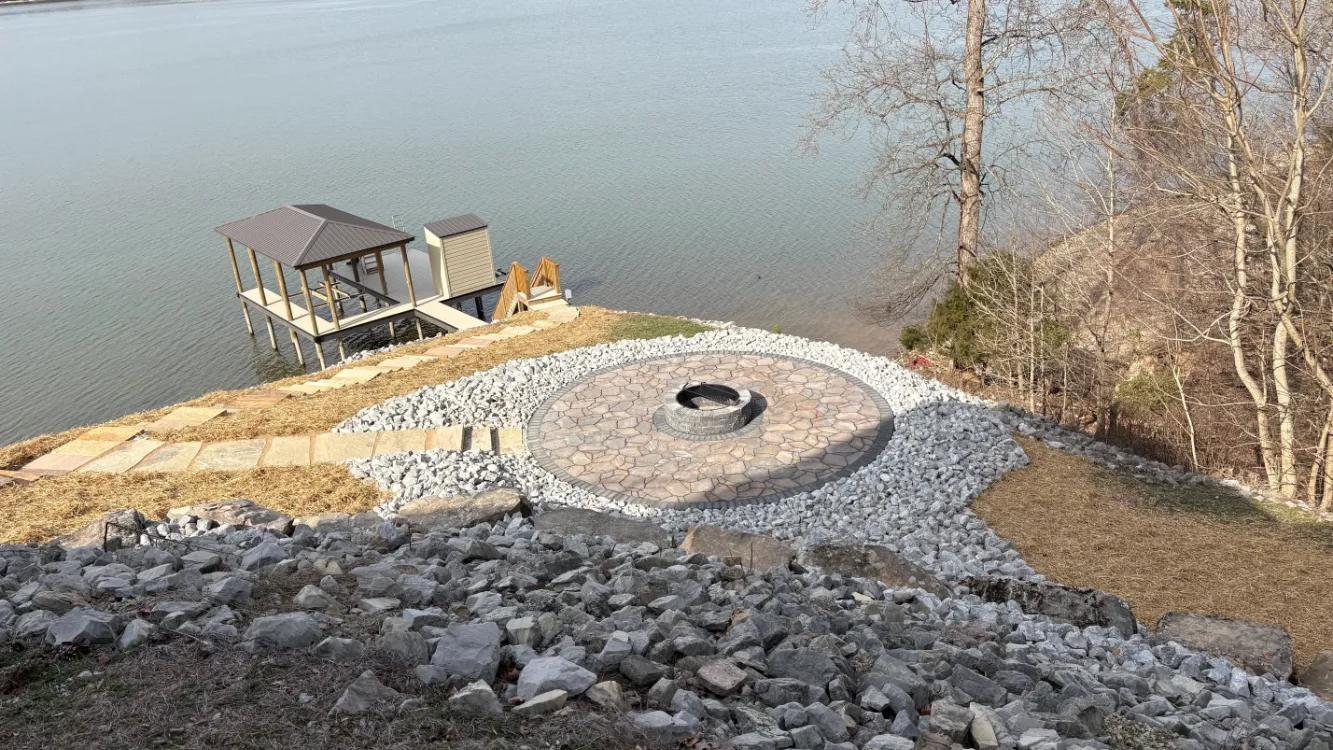
Choosing a patio material in East Tennessee is not just about looks. In the Knoxville area, we build for heavy spring rains, humid summers, clay-heavy soils, and the occasional freeze-thaw cycle that can expose weak bases and poor drainage fast. If you are comparing a paver patio vs concrete in Knoxville, the right answer depends on your yard, your budget, and how you plan to use the space.
At Rock Solid, based in Kingston, we install both systems and we repair plenty of patios that were built without proper base prep or water management. In this guide, we will compare pavers and poured concrete for local conditions, including patio cost in Knoxville, durability, drainage performance, repairability, and aesthetics. We will also walk through real-world scenarios we see in neighborhoods from Knoxville to Lenoir City, plus practical checklists you can use before you request quotes.
Quick comparison: pavers vs. poured concrete for East Tennessee
Before we get into the details, here is the big picture we see on real projects.
- Best for drainage and long-term serviceability: pavers (especially when built with the right base and edge restraint).
- Best for a clean, simple install at a lower upfront price: basic poured concrete.
- Best for slopes and tricky water flow: pavers, or concrete only if the drainage plan is solid (subgrade, slope, joints, and runoff control).
- Best for future repairs and changes: pavers, because you can lift and reset sections.
- Best for a “one-piece” modern look: concrete, including broom finish or decorative options.
If you want help sorting out which option fits your yard, our team can look at grading, downspouts, and soil conditions as part of our Hardscaping work.
Patio cost in Knoxville: what you are really paying for
When homeowners ask about patio cost in Knoxville, the price difference between pavers and concrete is usually driven by labor and base preparation, not just the surface material.
Typical cost ranges (realistic planning numbers)
Every site is different, but these planning ranges are common for the Knoxville area:
- Basic poured concrete patio: often the lower upfront cost per square foot.
- Paver patio: typically higher upfront cost per square foot due to excavation depth, base layers, edge restraints, and the time required to screed bedding sand and lay patterns.
- Permeable pavers: can be higher still because the base is engineered for water storage and infiltration, and the joint stone is specific.
Instead of focusing only on price per square foot, compare what is included:
- Excavation depth and how spoils are hauled off
- Base thickness and material (compacted aggregate, not just “some gravel”)
- Compaction method and number of passes
- Edge restraint type for pavers
- Concrete thickness, reinforcement, control joint layout, and finish
- Drainage plan (slope, downspout tie-ins, swales, or channel drains)
The hidden cost driver in East Tennessee: drainage and subgrade
Knoxville and surrounding areas often have clay-rich soils that hold water. When water sits under a slab or saturates a weak base, it can lead to settling, cracking, and heaving during freeze-thaw patio Tennessee weather swings.
Durability in Knoxville weather: freeze-thaw, heat, and soil movement
Durability is not just “will it crack.” It is how the patio behaves after years of water, temperature changes, and minor ground movement.
Poured concrete: strong surface, but cracks are normal
Concrete is strong in compression and performs well as a single surface. The tradeoff is that cracking is expected. Control joints help encourage cracks to occur in planned locations, but they do not eliminate cracking.
In East Tennessee, concrete durability depends heavily on:
- Subgrade prep: removing organic topsoil and soft spots
- Proper slope: usually away from the home so water does not pond
- Reinforcement: rebar or wire mesh, and correct placement
- Concrete mix and finishing: overwatering or over-finishing can weaken the surface
Freeze-thaw patio Tennessee conditions matter most when water is trapped under or within the slab. If water saturates the base and then freezes, expansion can contribute to movement or spalling at edges.
Paver patios: flexible system that handles movement better
When we build a paver patio in Knoxville TN, the durability comes from:
- A well-compacted aggregate base
- Correct bedding layer thickness
- Proper edge restraint so the field does not spread
- Jointing material that locks pavers in place
If the base is done right, pavers can handle freeze-thaw cycles well because minor movement can be corrected by lifting and resetting. That repairability is a major reason many homeowners choose pavers for long-term value.
Drainage performance: the deciding factor for many Knoxville yards
If your yard holds water, sits on a slope, or takes runoff from a roofline, drainage should be the first design conversation.
Concrete drainage: it sheds water, but you must control where it goes
Concrete is essentially impermeable. That means it will push water to the edges quickly. If the patio is not sloped correctly, you can end up with:
- Ponding in low spots
- Water running toward the foundation
- Erosion along the downhill edge
- Mud and splashback onto siding
For many homes, we recommend pairing concrete with patio drainage solutions such as:
- Regrading adjacent soil
- Extending downspouts away from the patio
- Adding a swale or drain at the low side
In Knoxville, we also pay attention to how water flows during a hard rain. A patio that looks fine on a dry day can turn into a sheet-flow problem in April storms.
Standard pavers: better joint drainage, but still needs a plan
Standard pavers are not automatically “drainage patios,” but the joints can allow some infiltration, and the system can be designed to direct water predictably.
If we are building on a site with moderate runoff, pavers often give us more options to:
- Adjust pitch subtly across the surface
- Tie into surrounding grades
- Add channel drains cleanly at transitions
Permeable pavers in Tennessee: when they make sense
Permeable pavers Tennessee homeowners ask about are designed to let water pass through the joints into a specially graded aggregate base. That base stores water and allows it to infiltrate into the soil over time.
Permeable pavers can be a great fit when:
- You have recurring puddles and want to reduce surface runoff
- You want to manage water without large visible drains
- Your lot layout makes it hard to send water elsewhere
They are not a magic fix for every yard. If the native soil is extremely slow to drain or the area receives concentrated flow from multiple downspouts, we may recommend a hybrid approach, like permeable sections combined with an overflow route.
If drainage is a concern, we can evaluate grading and long-term water management as part of our Landscaping and hardscape planning.
Repairability and maintenance: what happens after 5 to 15 years
Homeowners rarely ask about repairs at the start, but this is where the difference between pavers and concrete becomes very real.
Concrete: simple upkeep, harder repairs
Concrete maintenance is straightforward. Keep it clean, avoid harsh deicers, and consider sealing if you have decorative finishes.
When concrete has issues, repairs can be more visible:
- Cracks can be filled, but color matching is difficult
- Settling often requires slabjacking or removal and replacement
- Surface scaling can require overlays, which may not match perfectly
If you are planning to run utilities later (lighting, gas for a fire pit, drainage lines), concrete can be less forgiving because cutting and patching usually shows.
Pavers: slightly more routine upkeep, easier spot repairs
Pavers may need occasional joint sand touch-ups and periodic cleaning, especially under trees. In exchange, repairs are usually localized:
- If a section settles, we can lift pavers, correct the base, and reinstall
- Stains are often addressed by swapping individual units
- Future changes, like adding a walkway or expanding the patio, are easier to blend in
For many families, that flexibility is the best insurance policy against soil movement and evolving outdoor living plans.
Aesthetics and design flexibility: patterns, borders, and outdoor living features
Both materials can look great. The better choice depends on the style of your home and how custom you want the final space to feel.
Concrete looks: clean, continuous, and customizable
Concrete can be finished in several ways:
- Broom finish for traction
- Light stamp patterns for decorative appeal
- Integral color or stains (with proper sealing)
Concrete tends to fit modern and minimal designs well, and it creates a seamless surface for furniture.
Paver looks: high-end detail and easy upgrades
Pavers shine in design flexibility:
- Multiple laying patterns (running bond, herringbone, basket weave)
- Borders and soldier courses for a framed look
- Easy transitions into steps, seat walls, and fire pit areas
When we design outdoor living spaces across Roane County and Oak Ridge, pavers often help us match existing stonework, brick tones, or the character of older neighborhoods.
Real-world Knoxville scenarios: which patio wins and why
These are common situations we see in East Tennessee, and how we typically guide homeowners.
Scenario 1: A sloped backyard with runoff during heavy rain
If your patio area is on a slope, water will try to move fast across the surface. A poured slab can work, but only if the slope is carefully engineered and runoff is controlled at the edges.
In many sloped yards, we prefer pavers because we can:
- Create micro-grades that move water where we want it
- Add a discreet channel drain at a transition
- Build retaining or seat walls that stabilize the space
For steep sites, the patio choice is often tied to the overall grading plan. This is where professional hardscape design matters more than the surface you pick.
Scenario 2: A low area that stays soggy in spring
If you have a low spot that stays wet, concrete can make the symptoms worse by shedding water to the edges and keeping the soil saturated.
Depending on the cause, permeable pavers in Tennessee can be a strong solution because they reduce surface runoff and help manage water on-site. We still look at downspouts, neighbor runoff, and whether an overflow path is needed for major storms.
Scenario 3: A sunny, flat area for a simple grilling patio
If your yard is flat, drains well, and you want a straightforward surface, a concrete patio can be a practical win. It is clean, simple, and often the most budget-friendly way to get a functional outdoor space.
If you want to dress it up later, you can add landscape beds, lighting, and planting around it through our Property Maintenance and landscape services.
Scenario 4: You want a fire pit, seating wall, and a “destination” patio
For a true outdoor living build, pavers often provide the best long-term flexibility and the most cohesive look. They also pair naturally with steps and walls, which is important when you are creating multiple levels or managing grade changes.
Decision checklists: choose the right patio for your home
Use these checklists to narrow your choice before you call for quotes. They help you compare bids apples to apples.
Choose a paver patio if you want:
- Better repairability if settling occurs
- A premium, detailed look with borders and patterns
- Easier future expansion or changes
- Strong performance in freeze-thaw patio Tennessee conditions when built on a proper base
- Options for permeable pavers to improve drainage
Choose a concrete patio if you want:
- Lower upfront cost for a basic install
- A smooth, continuous surface with minimal joints
- A quick, simple build in a well-draining, stable area
- A modern look, especially with a clean broom finish or subtle decorative upgrades
Ask any contractor these questions (pavers or concrete)
- How will you handle downspouts and roof runoff near the patio?
- What base thickness and compaction method are you using?
- How will you prevent edge settling and erosion at the downhill side?
- What is the plan for freeze-thaw and water management under the surface?
- What warranty do you provide, and what is excluded (tree roots, drainage changes, soil issues)?
What we recommend in Knoxville: focus on base prep and water first
When homeowners ask us to settle the paver patio vs concrete Knoxville debate, we bring it back to two fundamentals: base preparation and drainage.
No matter which surface you choose, do not skip the planning steps that protect your investment:
- Confirm where water goes during a heavy rain
- Make sure grades direct water away from the home
- Build the base to match the soil conditions and expected loads
Conclusion: the best patio is the one built for your yard
If your top priority is a clean look and a lower upfront price, a concrete patio in Knoxville TN can be a smart choice, especially on a flat, well-draining site. If you want maximum design flexibility, better long-term repair options, and strong performance on challenging grades or drainage conditions, a paver patio in Knoxville TN is often the better investment.
We build patios across the Knoxville area from Kingston to Loudon, and we would be glad to walk your property, talk through drainage, and provide a clear scope of work. If you are ready to plan your outdoor space, start with our Hardscaping team and we will help you choose a patio that fits your home and East Tennessee weather.


