

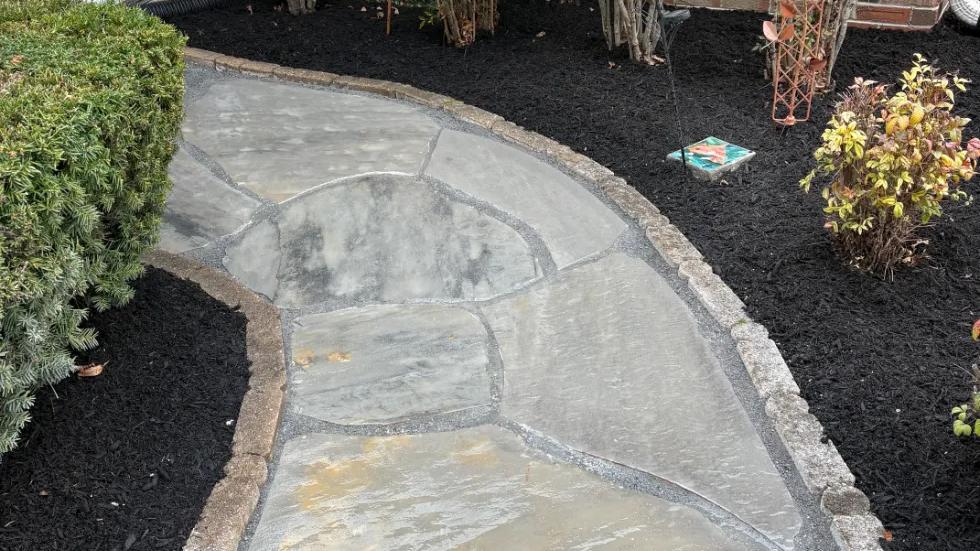
Clean bed lines do more than look sharp, they make mowing faster, keep mulch where it belongs, and help your landscaping look intentionally designed instead of “close enough.” When homeowners ask us about landscape edging in Knoxville, the real question is usually this: What border will stay crisp through East Tennessee rain, heat, clay soil, and the occasional freeze-thaw cycle without becoming a maintenance headache?
At Rock Solid, we install and maintain landscapes across Kingston and the Knoxville area, and edging is one of those small details that quietly protects the whole investment. A good edge reduces string-trimmer damage, keeps turf from creeping into beds, and makes seasonal refreshes like mulch top-offs much easier.
In this guide, we compare metal landscape edging vs plastic and stone edging for flower beds in the ways that matter most: installed cost ranges, longevity, appearance, mowing friendliness, and installation complexity. We will also share what tends to perform best in East Tennessee conditions, plus practical curb appeal edging ideas for front yards and foundation beds.
What “good” landscape bed edging needs to do in East Tennessee
Before comparing materials, it helps to define success. In our local soils and weather, edging fails for a few predictable reasons.
The Knoxville stress test: clay, downpours, and freeze-thaw
Knoxville and surrounding areas like Farragut, Hardin Valley, and North Knoxville see plenty of heavy rain events. Add compacted clay soil, and water often moves across the surface before it soaks in. That movement pushes mulch, undermines shallow edging, and exposes low spots.
Then we get winter swings where temperatures bounce above and below freezing. Even mild freeze-thaw can heave poorly anchored edging and open gaps that catch mower wheels.
- A stable base (compacted soil or aggregate where needed)
- Mechanical anchoring (stakes, pins, or mortar depending on the material)
- Enough height and depth to resist mulch washout and turf creep
- Smooth mowing geometry so maintenance stays easy
If you are already investing in bed refreshes and routine upkeep, edging should support that. Many of our clients pair edging upgrades with ongoing Property Maintenance so the lines stay sharp all season.
A quick note on “trench edging” vs installed edging
Some homeowners prefer a cut edge (a clean spade-cut trench) with no physical border. It can look great, but it requires regular re-cutting, especially in fast-growing months. Physical edging is usually the better fit for homeowners who want a crisp, low-maintenance border around mulch beds.
Metal landscape edging: the crisp, professional look that mows clean
Metal edging is one of our most recommended options for homeowners who want clean lines without a bulky border.
What it is and how it’s installed
Most residential systems are aluminum or steel strips with stakes. Installation is about more than pushing it into the soil. For a long-lasting result, we typically:
- Lay out the bed line with a hose or marking paint to get smooth curves
- Cut and shape the edge so transitions look intentional
- Trench to the right depth (deep enough to resist heave and mower impact)
- Drive stakes properly so the top stays level and tight
- Backfill and compact to lock the edge in place
In East Tennessee clay, skipping compaction is a common reason metal edging starts to wave over time.
Pros of metal edging
- Best-in-class clean lines for modern curb appeal edging ideas
- Mower friendly when set at the right height, you can run a wheel along the edge
- Great for curves without the choppy look you can get with short plastic segments
- Long service life when installed correctly
Cons and watch-outs
- Higher yard edging cost than plastic in most cases
- Can separate at joints if not connected well or if soil movement is significant
- Steel can rust if the coating is damaged, aluminum avoids rust but can bend if hit hard
Best uses in Knoxville yards
Metal edging shines for:
- Foundation beds
- Mulch rings around trees (especially when you want a crisp circle)
- Front yard beds where curb appeal matters most
- Beds adjacent to turf where you want easier mowing and less trimming
If you are updating the whole front yard layout, edging is often part of a broader Landscaping plan so plant spacing, mulch depth, and bed shapes all work together.
Plastic edging: budget-friendly, but not always “set it and forget it”
Plastic edging is popular because it is readily available and affordable. It can be a good choice in the right scenario, but it is also the option we most often see failing after a few seasons.
What it is and typical installation
Plastic edging usually comes in rolls or short sections with plastic or metal stakes. Homeowners often install it by cutting a shallow trench and staking it in.
The challenge is that plastic needs consistent support along the length. In uneven or rocky soil, it tends to ripple. In clay, it can slowly work upward as the soil expands and contracts.
Pros of plastic edging
- Lowest upfront cost for landscape border installation
- Easy to cut and DIY-friendly for simple shapes
- Works for temporary borders while you finalize a long-term design
Cons in East Tennessee conditions
- UV degradation over time, especially in sunny front yards
- Heaving and warping in clay soils and freeze-thaw
- Stake failure where stakes loosen and the edge pops up
- Less crisp appearance because the top edge can look wavy
Plastic can also create a “trip lip” if it rises above grade, which makes mowing harder and can lead to string-trimmer damage.
When plastic edging makes sense
We see plastic perform best when:
- The bed is small and relatively flat
- You are okay with periodic re-staking and re-leveling
- The border is not a major visual feature
If your goal is truly low maintenance, plastic is often a short-term solution. Many homeowners start with plastic, then upgrade to metal or stone once they see how much rework it needs.
Stone edging for flower beds: premium curb appeal and excellent durability
Stone edging is the most “architectural” option. It can look timeless, match your home’s materials, and handle weather extremely well when built on a proper base.
Types of stone edging we commonly see
In Knoxville and nearby communities, these are common:
- Natural stone (fieldstone, limestone, sandstone), often irregular and rustic
- Cut stone or stone caps for a cleaner, more formal look
- Concrete edging blocks that mimic stone, consistent size, easier to level
Stone edging is different from poured concrete curbing, but both fall into the hardscape category.
Pros of stone edging
- Excellent longevity when installed on a stable base
- High-end appearance that boosts curb appeal
- Adds weight and mass that helps resist mulch washout
- Pairs well with hardscapes like walkways, steps, and patios
If you are considering a patio or walkway at the same time, it is worth reviewing our hardscape approach under Hardscaping. Edging often looks best when it ties into other permanent features.
Cons and installation complexity
- Highest installed cost in most cases
- More labor and base prep (and that prep is what makes it last)
- Harder to change later if you plan to redesign beds soon
For stone to hold up, we typically recommend a compacted base (often crushed stone) and careful leveling. For certain applications, mortar may be appropriate, but many residential bed edges are dry-laid on a proper base to allow minor movement without cracking.
Best uses in East Tennessee yards
Stone edging is a great fit for:
- Front entry beds where you want a statement
- Beds near driveways or sidewalks where mower contact is frequent
- Sloped areas where mulch tends to wash
- Homes with existing stone or brick elements
Metal landscape edging vs plastic vs stone: cost, longevity, and maintenance
Homeowners usually weigh three factors: yard edging cost, how long it will last, and how much ongoing attention it needs. Here is how we think about it.
Typical cost ranges (what affects your price most)
Installed pricing varies by access, bed length, curves, soil conditions, and whether we are reshaping beds. Instead of quoting a single number, here are the variables that move your total up or down:
- Linear footage (long runs lower the per-foot rate)
- Curves and corners (more layout time and more cuts)
- Excavation needs (roots, compacted clay, buried rock)
- Base prep (often required for stone)
- Bed renovation (new soil, plant changes, mulch refresh)
As a general rule:
- Plastic is usually the lowest cost to install.
- Metal typically lands in the middle.
- Stone is usually the highest cost due to materials and labor.
If you are also refreshing mulch, our post on Mulch vs Pine Straw in Knoxville: Costs, Pros and Cons for East Tennessee Beds can help you plan the whole bed upgrade together.
Longevity and performance in Knoxville weather
- Plastic: Often short to mid-term. UV exposure and soil movement are the big enemies.
- Metal: Long-term when staked and compacted correctly. Performs well through wet seasons and normal freeze-thaw.
- Stone: Long-term to permanent when installed on a proper base. Excellent resistance to weather and mower bumps.
Maintenance and mowing friendliness
If easier mowing is a top priority, focus on the edge profile and height.
- Metal can be set nearly flush with turf for a clean mower pass.
- Plastic tends to creep upward, which increases trimming.
- Stone can be mower friendly if the top is level and the bed side is slightly higher, but tall stone borders may require trimming along the inside edge.
In practical terms, the “best edging for mulch beds” is often the option that keeps the bed line stable so you are not constantly re-cutting turf or re-sweeping mulch back into place.
Installation details that determine whether edging lasts (and what we do differently)
Two edging projects can use the same material and perform completely differently. The difference is almost always the installation.
Depth, anchoring, and compaction matter more than brand
In East Tennessee clay, we pay close attention to:
- Trench depth: Too shallow and the edge heaves. Too deep and you lose the clean reveal.
- Stake spacing: Wider spacing can allow waves, especially on curves.
- Compaction: Backfilled soil needs to be tamped to reduce settling.
For stone, base prep is the deciding factor. A thin layer of loose soil under stone is a recipe for uneven pieces after a wet season.
Drainage and slope: the hidden edging killer
If water is running through your beds during storms, edging becomes a dam. That can cause:
- Mulch washout at low points
- Soil erosion under the edge
- Gaps that invite turf intrusion
When we see these patterns, we may recommend addressing drainage first or at the same time. Our comparison of French Drain vs. Dry Creek Bed for East TN Drainage explains two common solutions we install when runoff is the real issue.
Utility and code considerations (what to check before you dig)
Edging usually does not require a permit, but you should still be smart about what is below grade.
- Always call 811 before digging, especially near driveways, mailbox runs, and irrigation lines.
- If you have landscape lighting or irrigation, plan edging so it does not pinch wire or tubing.
We coordinate these details during our site walk-through so the finished border does not create future service problems.
Which edging holds up best in East Tennessee weather?
If your goal is a crisp, low-maintenance border that still looks good after multiple seasons, here is what we typically see in the Knoxville area.
Our practical recommendations (based on real installs)
- Best overall balance for most homeowners: Metal edging. It delivers clean lines, is mower friendly, and stands up well to our rain and clay when installed correctly.
- Best for premium curb appeal and long-term durability: Stone edging. It is an investment, but it can look like it has always belonged with the home.
- Best for temporary or budget-first projects: Plastic edging, with the expectation that it may need rework.
Matching edging to your yard and lifestyle
Choose based on how you actually use the space.
- If you mow yourself and want faster weekly maintenance, metal is hard to beat.
- If you want a front yard “finished” look that complements a walkway, stone often wins.
- If you are experimenting with bed shapes or planning a larger renovation later, plastic can be a placeholder.
We also consider micro-location. Properties in Knoxville with steeper lots or heavy runoff may benefit from stone or a thoughtfully installed metal edge with drainage improvements. Homes in Lenoir City and Loudon often have a mix of clay and rocky soil, which can influence trenching and base prep. In Oak Ridge, we frequently see mature landscapes where tree roots affect how and where we can anchor edging.
Curb appeal edging ideas that look intentional (not like an afterthought)
Edging looks best when it supports the overall design. Here are a few approaches we use often.
1) The “mow strip” concept (stone or pavers next to turf)
2) Crisp metal lines with layered planting
Metal edging pairs well with:
- A defined mulch band (typically 2 to 3 inches deep after settling)
- A front row of low plants (like dwarf shrubs or perennials)
- Taller structure plants behind
This layered look reads clean from the street and makes beds feel planned.
3) Natural stone for rustic, East Tennessee character
If your home sits on a wooded lot or you have a more natural landscape style, irregular stone edging can blend beautifully. It also hides minor soil movement better than perfectly straight materials.
4) Tie edging into your maintenance plan
Even the best landscape border installation benefits from seasonal touch-ups:
- Re-establish mulch depth after heavy rains
- Keep soil from building up against the edge
- Re-cut turf where it tries to creep
If you want your beds to stay sharp without weekend projects stacking up, our Property Maintenance team can keep bed lines, mulch, and trimming consistent through the growing season.
Conclusion: choose the edging that matches your goals, then install it for the long haul
When you compare metal landscape edging vs plastic and stone, the “best” choice depends on what you value most. Plastic is budget-friendly but often needs rework. Metal delivers the crisp look many Knoxville homeowners want and stays mower friendly when it is installed and compacted correctly. Stone edging for flower beds offers the most timeless curb appeal and durability, especially where runoff or mower contact is common.
If you want help selecting the best edging for mulch beds on your property, we can walk the site, look at slope and soil conditions, and recommend a solution that fits your style and maintenance goals. Explore our Landscaping and Hardscaping services, then reach out to schedule a consultation in Knoxville, Kingston, and surrounding communities.


