

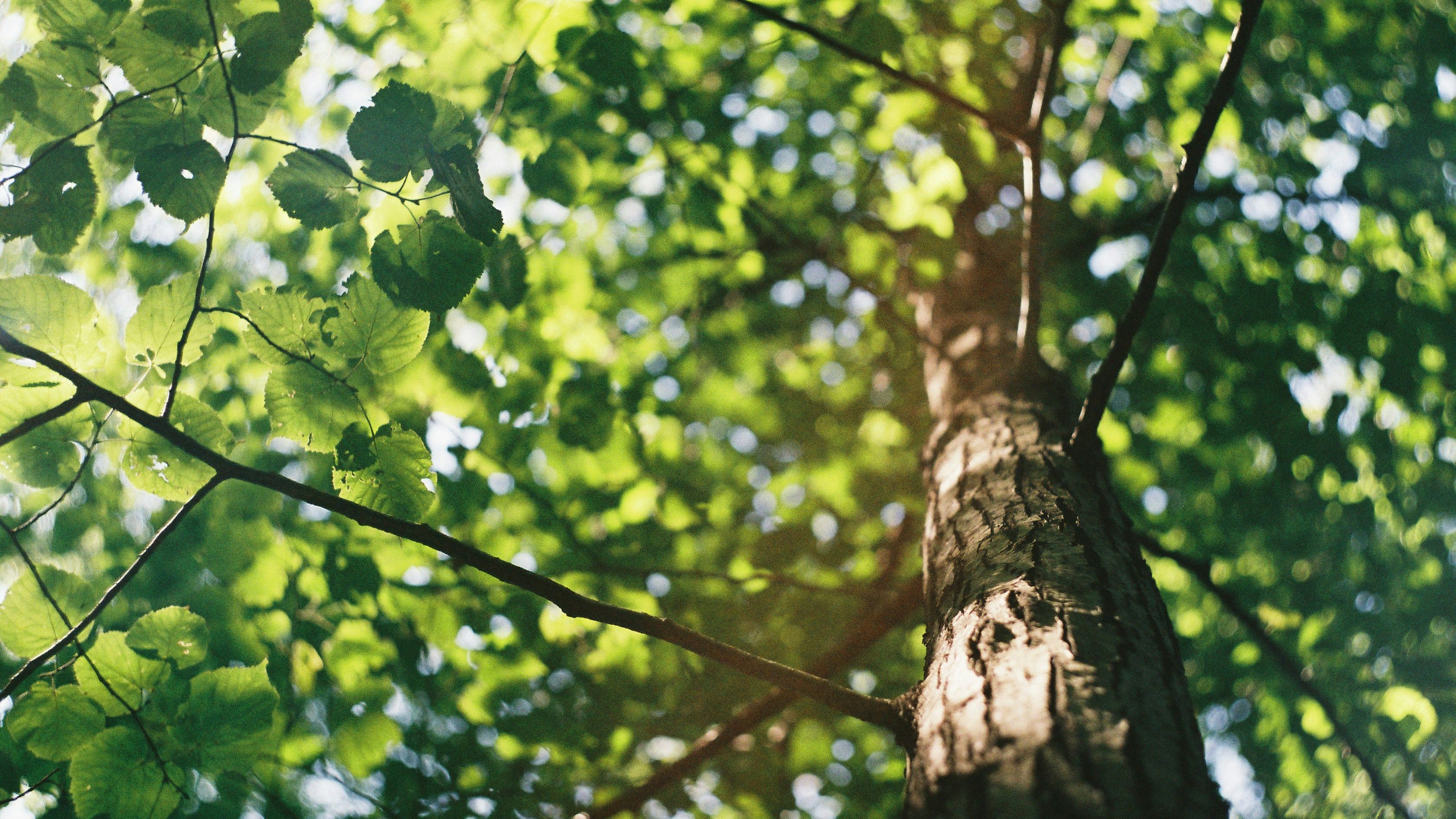
In East Tennessee, a “good yard tree” has to do more than look nice. It has to tolerate heavy clay, handle hot, humid summers, stand up to stormy weather, and live peacefully near patios, sidewalks, and sometimes septic lines. We see it every year in Kingston and across the region: the wrong tree in the wrong spot leads to heaving pavers, cracked walks, constant cleanup, or a stressed tree that never really thrives.
In this guide, we are sharing our field-tested picks for the best trees for East Tennessee yards, with a focus on three homeowner priorities: roots (how to avoid damage to hardscapes and utilities), shade (how to get real cooling without creating a maintenance headache), and clay (how to plant so a tree can actually establish in our soils). We will also cover placement rules of thumb, mature size planning, and a practical watering plan for the first two years, which is the make or break window for most new trees.
If you are planning a patio, walkway, outdoor living space, or a full landscape refresh, we will also point out where tree choices should be coordinated with Hardscaping and Landscaping so everything works together long-term.
What makes East Tennessee tough on trees (and why roots matter so much)
East Tennessee sits in a challenging sweet spot for trees. We get long summer heat, sudden downpours, and windy thunderstorms that can saturate soil and then push against a full canopy. Many neighborhoods also have compacted subsoil from construction, which makes clay behave even “tighter” than it does in undisturbed ground.
Here is what we plan around on real properties in Roane County, Knoxville, and the surrounding areas:
- Clay soil drainage swings. Clay can hold water for days after a heavy rain, then bake hard in July. That stresses roots and reduces oxygen in the root zone.
- Shallow rooting is common. In compacted clay, many trees develop a wider, shallower root system because it is easier than pushing deep into dense soil. That is one reason “tree roots near patio” problems show up even when a tree is not right on top of the hardscape.
- Storm loading. Saturated soil plus wind is a common failure recipe. “Storm resistant trees” are not just about wood strength, they are about root structure, canopy shape, and good planting.
- Hardscape conflicts. Patios, sidewalks, driveways, and retaining walls are rigid. Roots are persistent. When the two compete, hardscape usually loses.
Best trees for East Tennessee clay soil that play nicer with patios and sidewalks
Below are tree options we regularly recommend as “good neighbors” in East Tennessee landscapes. No tree is truly root-free, but these are generally more compatible with residential hardscapes when you give them appropriate space and plant them correctly.
Japanese maple (Acer palmatum) for smaller shade and low root conflict
Japanese maples are a strong choice when you want a focal tree near an entry walk or patio but you do not want a massive canopy or aggressive roots. They are not native trees East TN, but many cultivars are well-adapted when sited correctly.
- Mature size: Often 10 to 20 feet tall and wide (varies by cultivar)
- Best use: Courtyards, front-yard accents, partial shade areas
- Why we like it: Predictable size, manageable leaf drop, typically less likely to heave hardscapes compared to large shade trees
Clay tip: Japanese maples hate “wet feet.” In heavy clay, we often recommend improving the planting area with organic matter and making sure downspouts are not dumping near the root zone.
Eastern redbud (Cercis canadensis), a native favorite that fits tight spaces
If you want a beautiful spring bloom and a tree that fits typical suburban setbacks, redbud is one of our most reliable native trees East TN.
- Mature size: 15 to 25 feet tall, similar spread
- Best use: Under high canopies, near patios with proper spacing, front-yard color
- Why we like it: Handles clay better than many ornamentals, supports pollinators, easy to integrate into landscape beds
Redbud is not a “deep shade” tree, but it is excellent for softening hardscape edges and adding seasonal interest without overpowering a yard.
Serviceberry (Amelanchier), multi-season interest with moderate roots
Serviceberry is another tree we like for homeowners who want curb appeal without constant pruning battles.
- Mature size: 15 to 25 feet tall
- Best use: Near patios and walks if you allow room for the canopy
- Why we like it: Spring flowers, edible berries for birds, fall color, generally compatible with residential spaces
Placement note: Berries can drop. If you want one near a paver patio, consider putting it a bit off the “main seating” zone so cleanup is easy.
Magnolia (certain varieties) for structure and storm tolerance
Magnolias can do very well in East Tennessee, but variety matters. Many homeowners love the evergreen look of Southern magnolia, while others prefer smaller cultivars.
- Mature size: Can vary widely, from 15 feet to 60 plus feet depending on type
- Best use: Privacy screening, evergreen structure, statement tree
- Why we like it: Thick leaves, strong visual presence, good performance when properly sited
If you want evergreen screening but worry about size, we recommend discussing cultivar selection during a site plan. This is where our Landscaping team can help match a tree to the space you actually have.
Tulip poplar (Liriodendron tulipifera) and sycamore (Platanus) are usually “not near hardscapes” trees
These are common in the region and can be fast-growing, but for most residential yards they are better suited to larger lots or naturalized areas.
- Why we are cautious: Potential for large size, surface rooting in compacted clay, and more conflict risk near patios and sidewalks
If your goal is low maintenance shade trees near a patio, these are typically not our first pick.
Low maintenance shade trees for East Tennessee that handle heat and storms
For many homeowners, the main goal is shade that actually cools the house and outdoor living areas. In our climate, shade is not just comfort, it can reduce heat stress on turf and help outdoor spaces feel usable in July and August.
Here are several strong performers for “shade plus durability,” with honest notes on spacing and maintenance.
Willow oak (Quercus phellos), a strong shade tree with a refined canopy
Willow oak is one of our go-to oaks for residential shade in East Tennessee.
- Mature size: Often 50 to 70 feet tall, 30 to 50 feet wide
- Why we like it: Good storm performance when structurally pruned, less messy than some large shade trees, excellent canopy for cooling
- Root note: Like all large trees, it needs space. It is not a “plant it 6 feet from the patio” tree.
If you want a big shade tree, plan the hardscape around it, not the other way around. We often coordinate tree placement with Hardscaping so patios, seat walls, and walks have room to expand and settle without fighting roots.
Shumard oak (Quercus shumardii) for strong structure and fall color
Shumard oak is another excellent option for larger yards.
- Mature size: 50 to 80 feet tall
- Why we like it: Strong branching, good wind tolerance when trained early, long-lived
Early training matters. We recommend structural pruning in the first 5 to 10 years to reduce the chance of weak crotches that split in storms.
Bald cypress (Taxodium distichum), surprisingly adaptable and storm-tough
Bald cypress is often associated with wet areas, but it can do well in many East Tennessee sites, including heavier soils.
- Mature size: 50 to 70 feet tall
- Why we like it: Good storm resistance, unique texture, tolerates periodic wetness better than many shade trees
If you have a low area that stays damp after heavy rain, bald cypress can be a smart alternative to trees that will struggle with oxygen-starved roots. If drainage is a bigger yard issue, our team often pairs planting solutions with drainage strategies like those discussed in French Drain vs. Dry Creek Bed for East TN Drainage.
American hornbeam (Carpinus caroliniana), a smaller shade option for tighter yards
Hornbeam is a great “in-between” tree when you want shade but do not have room for a full-size oak.
- Mature size: 20 to 35 feet tall
- Why we like it: Dense canopy, strong wood, good fit near patios if spaced properly
This is a solid pick for homeowners who want low maintenance shade trees without committing to a 70-foot canopy.
Trees we are careful with near septic lines, patios, and sidewalks
Homeowners often ask us for a list of “trees with non-invasive roots.” The honest answer is that any tree can cause problems if it is planted too close to a rigid surface or a utility line. That said, some species are more likely to create conflicts in East Tennessee landscapes.
Here are general categories we treat cautiously near hardscapes and septic systems:
- Fast-growing, water-seeking trees like willows and some poplars. These can be more likely to chase moisture and create root pressure near pipes.
- Very large mature trees planted too close to patios, retaining walls, or foundations. Even “good” trees become a problem when they outgrow the space.
- Shallow-rooting species in compacted clay. If the soil is dense and the tree cannot root down, it will root out.
If you have a septic system, we recommend treating the drainfield as a no-tree zone. Even if roots do not invade pipes, the weight and water use can interfere with performance. When we do site planning, we ask homeowners to identify septic components early so we can design around them.
Placement rules of thumb: how far to plant a tree from patios, sidewalks, and the house
Smart placement is the biggest lever you have to prevent “tree roots near patio” issues. Here are the guidelines we use on many East Tennessee properties, with the note that exact distances depend on species, soil conditions, and hardscape type.
Use mature canopy width, not the nursery tag
Nursery trees look small. What matters is the mature spread.
- Small trees (15 to 25 foot spread): Aim for 8 to 12 feet from patios and walks
- Medium trees (25 to 40 foot spread): Aim for 12 to 18 feet
- Large shade trees (40 to 60 foot spread): Aim for 18 to 25 feet or more
This spacing helps reduce root pressure under hardscape and keeps the canopy from overhanging roofs, gutters, and seating areas.
Plan for shade where you actually use it
We like to map shade like this:
- Identify where you sit or walk most (patio, grill area, front walk, driveway approach).
- Note the west and southwest exposure, which is where afternoon heat hits hardest.
- Place shade trees to block late-day sun, but keep them far enough away to avoid hardscape conflict.
If you are building or upgrading a patio, it helps to plan trees and hardscape together. A well-built base and edge restraint matter too, especially in our wet seasons. If you are evaluating a patio project, our guide Paver Patio Base in East TN: Depth, Stone & Compaction Tips explains why stability starts below the surface.
Avoid common “future problems” spots
We often recommend avoiding these placements:
- Directly inside narrow strips between sidewalk and curb (limited soil volume leads to surface roots)
- Right next to retaining walls (roots and wall drainage do not mix well)
- Under power lines with a tree that will exceed the clearance zone
- In areas where downspouts dump constantly (unless the species tolerates periodic saturation)
How to plant a tree in Tennessee clay soil (so it actually establishes)
Most tree failures we see are not because the homeowner picked a “bad” tree. They fail because of planting depth, poor root prep, and water management in the first growing seasons.
Here is the process we follow and recommend for tree planting tips Tennessee homeowners can trust.
1) Dig wide, not deep, and keep the root flare visible
- Dig the hole 2 to 3 times as wide as the root ball.
- Dig no deeper than the root ball height.
- Make sure the root flare (where the trunk widens at the base) ends up slightly above finished grade.
Planting too deep is one of the fastest ways to stress a tree in clay soil because it reduces oxygen to the roots.
2) Break up glazing and avoid creating a “clay pot”
In clay, the sides of a freshly dug hole can get slick. Roots can hit that barrier and circle.
- Rough up the sides of the hole with a shovel.
- If the soil is extremely compacted, consider a broader planting area, not just a single hole.
3) Correct circling roots before you backfill
Container-grown trees often have circling roots.
- Gently tease or cut circling roots so they grow outward.
- This step can feel intimidating, but it can prevent future girdling roots and stability issues.
4) Backfill thoughtfully, then mulch correctly
In many cases, we backfill primarily with the native soil, then improve the top few inches with compost. Over-amending the hole can create a “bathtub effect” in clay.
Mulch tips:
- Apply 2 to 3 inches of mulch.
- Keep mulch 3 to 6 inches away from the trunk.
- Make a wide mulch ring, ideally 3 feet across or more.
5) Stake only if needed, and remove stakes early
If the site is windy or the root ball is unstable, staking can help for the first season. But trees need movement to build trunk strength.
- Use staking only when necessary.
- Remove stakes after the first growing season in most cases.
Watering in the first two years: a simple schedule that works in East Tennessee
The first two years are when you are building the root system that will carry the tree through drought and storms. In our experience, inconsistent watering is the biggest reason new trees struggle in Kingston-area summers.
Here is a practical approach that works for many trees in our region. Adjust based on rainfall, soil drainage, and the specific species.
Year 1 watering (establishment year)
- Weeks 1 to 4: Water 2 to 3 times per week (slow soak), unless we are getting steady rain.
- Months 2 to 4: Water 1 to 2 times per week.
- Summer heat (June to September): Plan on a deep soak weekly, sometimes twice weekly during dry stretches.
Year 2 watering (building resilience)
- Water deeply every 7 to 14 days during dry periods.
- After heavy rains, pause and let the soil breathe.
How to tell if you are overwatering or underwatering
- Underwatering signs: Wilting in the morning, leaf scorch on edges, early leaf drop
- Overwatering signs: Yellowing leaves, soggy soil for days, slow growth, fungus or root stress
If you are already thinking about irrigation, you may find our article Irrigation Systems in East Tennessee: Do You Need One? helpful for deciding whether drip, sprinklers, or targeted hand-watering makes the most sense.
Putting it all together: a few real-world tree planning scenarios we see locally
Homeowners often come to us with a specific goal, not a species. Here are a few common scenarios we see in Roane County and nearby communities, and how we typically approach the tree plan.
Scenario 1: Shade for a west-facing patio without damaging pavers
Goal: Afternoon shade and comfort.
Our approach:
- Choose a medium to large shade tree, often an oak, placed far enough away (commonly 18 to 25 feet or more depending on mature size).
- Use a smaller ornamental tree closer to the patio edge for visual softness, such as redbud or serviceberry.
- Make sure the patio base and edge restraint are built to handle seasonal movement, especially in clay.
If you are in the Knoxville area where heavy summer downpours can be intense, we also look at runoff patterns so the tree is not sitting in a constant puddle zone.
Scenario 2: Front yard curb appeal in a tighter subdivision lot
Goal: A tree that will not swallow the house or lift the sidewalk.
Our approach:
- Favor smaller trees like redbud, serviceberry, Japanese maple, or hornbeam.
- Keep the tree off the sidewalk and driveway by a reasonable buffer.
- Build a wide mulch ring and avoid turf right up to the trunk, which reduces mower damage and improves root health.
Scenario 3: A low spot that stays wet after storms
Goal: A tree that will tolerate periodic saturation.
Our approach:
- Consider bald cypress or other tolerant species.
- If standing water persists, address drainage first so you are not asking a tree to solve a grading issue by itself.
In areas like Loudon and Lenoir City, we frequently see yard drainage and clay compaction working together to stress plantings. A tree plan is strongest when it is part of a full site plan.
Conclusion: choose the right tree, then give it room and a strong start
Choosing the best trees for East Tennessee is not just about picking what looks good at the garden center. It is about matching the tree to clay soil conditions, planning for mature size, and keeping roots far enough from patios, sidewalks, and septic components to prevent expensive conflicts later.
If you want smaller, hardscape-friendly options, trees like redbud, serviceberry, hornbeam, and many Japanese maples can be excellent fits. If you want true shade, oaks and bald cypress can perform very well here, as long as you give them the space and early care they need.
If you would like help selecting trees and placing them around outdoor living areas, we can design a plan that protects your investment in both plants and hardscape. Explore our Landscaping and Hardscaping services, or reach out to our team in Kingston to talk through your property goals.


