

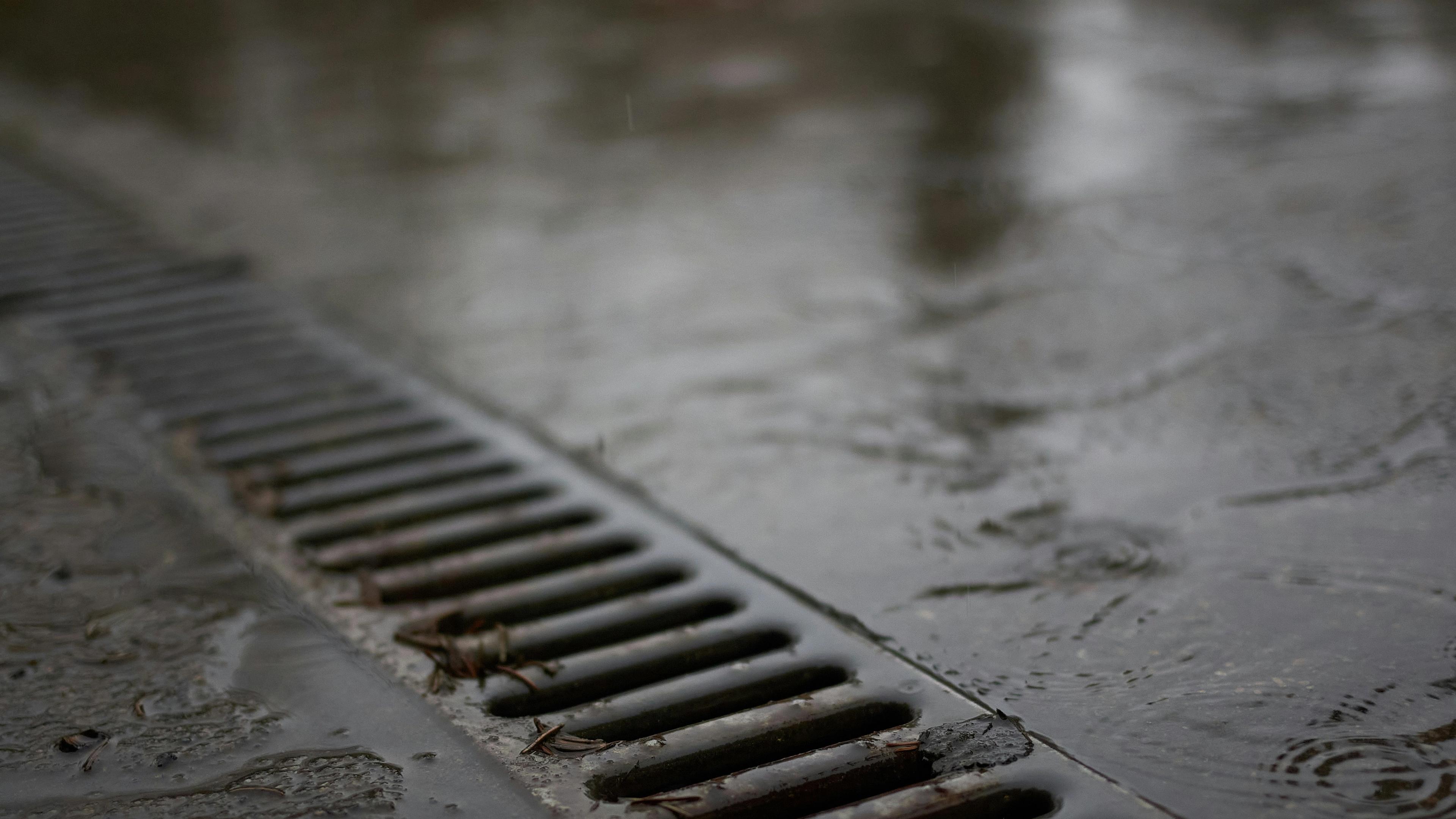
Surface water is one of the fastest ways to damage a driveway, patio, or landscape bed in East Tennessee. We see it all the time around Kingston and across the region: a heavy rain hits, water sheets off a roof, clay soil seals up, and suddenly you have puddles that do not drain, mulch that floats, and muddy ruts that keep coming back.
If you are comparing catch basin vs trench drain, you are already asking the right question. These are two of the most effective yard drainage solutions for managing runoff, but they solve slightly different problems. Choosing the wrong one (or installing the right one incorrectly) can lead to clogged inlets, undermined hardscapes, and water that simply relocates to the next low spot.
In this guide, we will break down how catch basins and trench drains work, where each is the best fit for driveways, patios, and downspouts, and the most common installation mistakes we see in East Tennessee clay soil drainage projects. Our goal is to help you make a confident, informed decision before you invest in stormwater management hardware.
Catch basin vs trench drain: The simplest way to think about it
Both systems are designed for surface water drainage, but they collect and move water differently.
What a catch basin does
In practical terms, a catch basin is best when:
- Water naturally funnels to a low point and you need a “collection box” there
- You want to intercept runoff from multiple directions
- You need a place for debris and sediment to settle (which can reduce downstream clogging)
Catch basins are often paired with solid pipe (for moving water away) or tied into other systems depending on the site.
What a trench drain does
- Water flows across a broad edge, like the bottom of a driveway or the entry to a garage
- You need to cut off sheet flow before it reaches a structure
- You want to capture runoff evenly across a width, not just at one low spot
If you have ever searched for a driveway trench drain, you have likely seen these installed right in front of garage doors or across a sloped drive where water races downhill.
Why East Tennessee clay changes the decision
In Kingston, Knoxville, Lenoir City, Loudon, Oak Ridge, and much of Roane County, our soil tends to be clay-heavy. Clay does not absorb water quickly, especially once it is compacted by construction traffic or repeated foot and mower traffic.
That means:
- Runoff volumes are higher during storms
- Water stays on the surface longer
- “Just add topsoil” rarely fixes drainage long-term
So the best stormwater management plan usually focuses on capturing and routing water reliably, not hoping it soaks in.
Where catch basins work best (and where they disappoint)
Catch basins are one of our most-used downspout drainage options when the site layout creates a clear low point or collection area.
Best uses for catch basins
1) Downspout tie-ins and roof runoff
If you have a downspout that dumps next to the foundation and creates splash-out, erosion, or basement moisture risk, a catch basin can be a clean way to intercept that water and pipe it to a safe discharge. In clay soils, this is often more reliable than short extensions that still leave water pooling.
2) Low corners of patios and pool decks
If you are planning a new patio or correcting drainage around an existing one, our Hardscaping team typically evaluates drainage first because water issues are easier to solve before base layers and edges are finalized.
3) Yard low spots where multiple flows meet
If two swales meet, or runoff from a neighbor’s yard enters yours at a corner, a catch basin can serve as a collection node. From there, you can route water away through solid pipe to daylight (where allowed and appropriate) or to another approved outlet.
Where catch basins often disappoint
They are not great at stopping sheet flow across a wide edge.
If water is spreading across the full width of a driveway, a single catch basin can be overwhelmed or simply bypassed. Water follows the path of least resistance. If the basin is not exactly at the low point, water will run around it.
They require maintenance.
Catch basins work best when the sump can collect sediment and debris, but that also means they need periodic cleanout. In fall, we see grates covered with leaves and the basin becomes a “lid” instead of an inlet.
For commercial sites, we often build cleanouts into the maintenance plan. If that is relevant for your property, our Property Maintenance service can help keep drainage inlets functional through the seasons.
Where trench drains work best (especially driveways and garage entries)
Trench drains shine when you need to intercept water moving across a broad surface.
Best uses for trench drains
1) Driveways sloping toward a garage
This is the classic driveway trench drain scenario. If your driveway pitches toward the garage, water can push under the door, stain the slab, or freeze in winter cold snaps.
2) At the base of a sloped hardscape
If a walkway, patio, or pool deck sits below a slope, water can sheet off the slope and across the hardscape. A trench drain at the interface can act like a “cutoff” that keeps the usable surface drier.
3) Commercial entries and loading areas
For small businesses, trench drains are common at entry points where water must be managed to prevent slip hazards and icing. In places like Knoxville and Oak Ridge, we often see trench drains used to protect building thresholds and direct stormwater to controlled outlets.
Where trench drains can be the wrong choice
They are not a cure for a soggy yard.
If the problem is a lawn that stays wet for days, a trench drain in the turf is usually not the best first move. In that case, the issue is often grading, compaction, or subsurface movement. You may need regrading, a different yard drainage solution, or a combination approach.
If you are dealing with persistent saturation, this related guide can help you think through options before you commit to hardware: How to Fix a Soggy Yard in Loudon Without Regrading Everything.
They must be installed with correct slope and outlet planning.
Picking the right solution by problem area (driveway, patio, downspouts)
Homeowners and property managers usually do not think in terms of “catch basin vs trench drain” at first. They think, “Water is getting in my garage,” or “My patio puddles,” or “My downspout is carving a trench.” Here is how we approach those common scenarios in East Tennessee.
Driveways and garage thresholds
If water is flowing across the width of the driveway toward the garage, a trench drain is usually the first thing we consider.
We look at:
- The pitch of the driveway and where the water accelerates
- The width of sheet flow during a heavy rain
- Where an outlet can realistically go (daylight, tie-in, or other approved discharge)
- Whether the driveway material and jointing will shed sediment into the drain
Patios, pool decks, and outdoor living areas
For patios, the decision depends on whether the water concentrates at a point or spreads across an edge.
- If there is a defined low corner, a catch basin can be clean and effective.
- If runoff crosses a long edge (for example, a slope draining onto a patio), a trench drain can intercept that sheet flow.
When we build or repair outdoor living spaces through our Landscaping and hardscape work, we plan drainage around the base, bedding layers, and surrounding grades. If you want to understand why base prep matters so much in our climate, this is a helpful companion read: Paver Patio Base in East TN: Depth, Stone & Compaction Tips.
Downspouts and roof runoff
For downspout drainage options, a catch basin is often the most straightforward approach, but not always.
We typically recommend a catch basin when:
- Multiple downspouts can be routed to one collection point
- There is a good location for a sump that can be cleaned out
- The area around the downspout is prone to mulch washout or erosion
We may recommend a trench drain instead when:
- A long roof edge dumps water onto a walkway or patio and you need linear capture
- The runoff spreads out and does not naturally funnel to a single point
In all cases, the outlet plan matters more than the inlet style. Capturing water is only half the job. You need a safe place to send it.
Common installation mistakes we see in clay-heavy East TN soils
In East Tennessee, drainage failures are rarely caused by “bad products.” They are usually caused by planning and installation issues that do not match our soils, rainfall patterns, and freeze-thaw cycles.
Mistake 1: Installing the inlet too high (water runs around it)
This is the number one issue we see with catch basins and trench drains. If the grate is not at the true low point, water will bypass it. Even being a half inch too high can matter on a flat patio or driveway.
What we do instead:
- We identify the real low point after final grading, not before
- We set the grate elevation to accept water without creating a trip hazard
- We confirm flow paths with a hose test before we finalize surrounding surfaces
Mistake 2: No true outlet, or an outlet that cannot handle volume
Good outlet planning considers:
- Where water can daylight without causing erosion
- Whether you need a pop-up emitter, a flared end section, or a rock apron
- Whether the discharge point is far enough away from structures
If your property is in a tighter neighborhood area of Lenoir City or Loudon, outlet placement can also be limited by lot lines and existing utilities. We always recommend calling 811 before any digging and checking for easements or drainage swales that must remain functional.
Mistake 3: Undersized pipe, or corrugated pipe where solid pipe is needed
For moving water away from a catch basin or trench drain, pipe choice matters.
- Corrugated pipe can work in some yard applications, but it is more prone to holding sediment in its ribs.
- Solid pipe generally moves water more efficiently and is easier to keep clear.
In clay-heavy areas, we often see sediment-laden runoff. If the pipe is undersized or too flat, it becomes a settling tube.
Mistake 4: Skipping gravel support and proper bedding
Common problems we see:
- Channel set on disturbed soil with no compacted base
- Concrete collars that are too thin or not tied into the surrounding slab
- Pavers installed tight to the drain without proper edge restraint
These issues can lead to grates popping, channels cracking, and water getting under the driveway or patio surface.
Mistake 5: Not accounting for clay soil movement and freeze-thaw
East Tennessee winters are not like the far north, but we still get freeze-thaw cycles that can heave poorly installed hardscape edges and drainage components.
We reduce risk by:
- Compacting base materials in lifts
- Using appropriate stone gradations for drainage layers
- Avoiding “mud set” installs where clay contaminates the base
If you are already seeing movement, cracking, or separation around hardscapes, drainage is often part of the root cause.
Mistake 6: Treating drainage as separate from grading
Drainage hardware cannot fix a yard that is graded to send water toward the house or to trap water in the middle of the lawn.
In many projects, the best results come from combining:
- Minor regrading to create predictable flow paths
- Strategic inlets (catch basins or trench drains)
- Proper outlet routing
This is especially true on properties with multiple “micro low spots” where water collects after every storm.
What we look at during a drainage evaluation (our practical checklist)
When someone calls us from Kingston or nearby areas, we do not start by selling a specific product. We start by diagnosing the water.
Here is what we evaluate on site:
- Source: Roof runoff, driveway runoff, hillside runoff, or groundwater seepage
- Flow path: Where water travels during a heavy rain, not just during a drizzle
- Soil behavior: Compaction, clay content, and how quickly water infiltrates
- Hardscape elevations: Door thresholds, garage slabs, patio edges
- Outlet options: Safe discharge points that will not erode or create neighbor issues
- Maintenance realities: Leaf load, sediment load, and how accessible cleanouts are
This approach helps us recommend the right mix of surface drains, grading changes, and landscape adjustments.
If you are in Roane County and dealing with runoff that also affects retaining walls, it is worth understanding how wall drainage ties into the bigger picture. This guide explains what “done right” looks like behind walls: Retaining Wall Drainage: Gravel, Pipe and Weep Holes Explained.
Maintenance tips that keep drains working year after year
Even a perfectly installed system can fail if it is never cleaned. In our climate, the two biggest clogging seasons are spring storms (sediment) and fall leaf drop (organic debris).
Here is what we recommend to most property owners:
- Inspect grates monthly during rainy seasons: A quick visual check can prevent overflow.
- Clean catch basin sumps as needed: If sediment fills the bottom, it will reduce capacity and increase downstream clogging.
- Rinse trench drain channels: A hose flush after heavy storms helps move fine grit to the outlet.
- Watch for settling: If the drain edge drops, water can pond along the channel and create trip hazards.
- Keep downspout screens and gutters maintained: Roof debris ends up in your drainage system.
For businesses, we often build these checks into a routine plan so drainage stays functional and liability risks stay low.
Conclusion: Choose the drain that matches how water moves on your property
When homeowners ask us about catch basin vs trench drain, we bring it back to one key idea: collect water where it naturally concentrates, and intercept it where it sheets across a wide area.
- Choose a catch basin when water funnels to a low point, especially for downspout drainage options and patio corners.
- Choose a trench drain when you need a linear cutoff, especially for a driveway trench drain scenario or a hardscape edge that takes sheet flow.
In clay-heavy East Tennessee soils, the details matter. Proper elevation, base support, pipe sizing, and a real outlet plan are what make stormwater management systems work long-term.
If you want help diagnosing the water on your property in Kingston or nearby communities, reach out to us. We can evaluate the site and recommend a clear plan, whether that involves Hardscaping, Landscaping, or ongoing Property Maintenance.


