

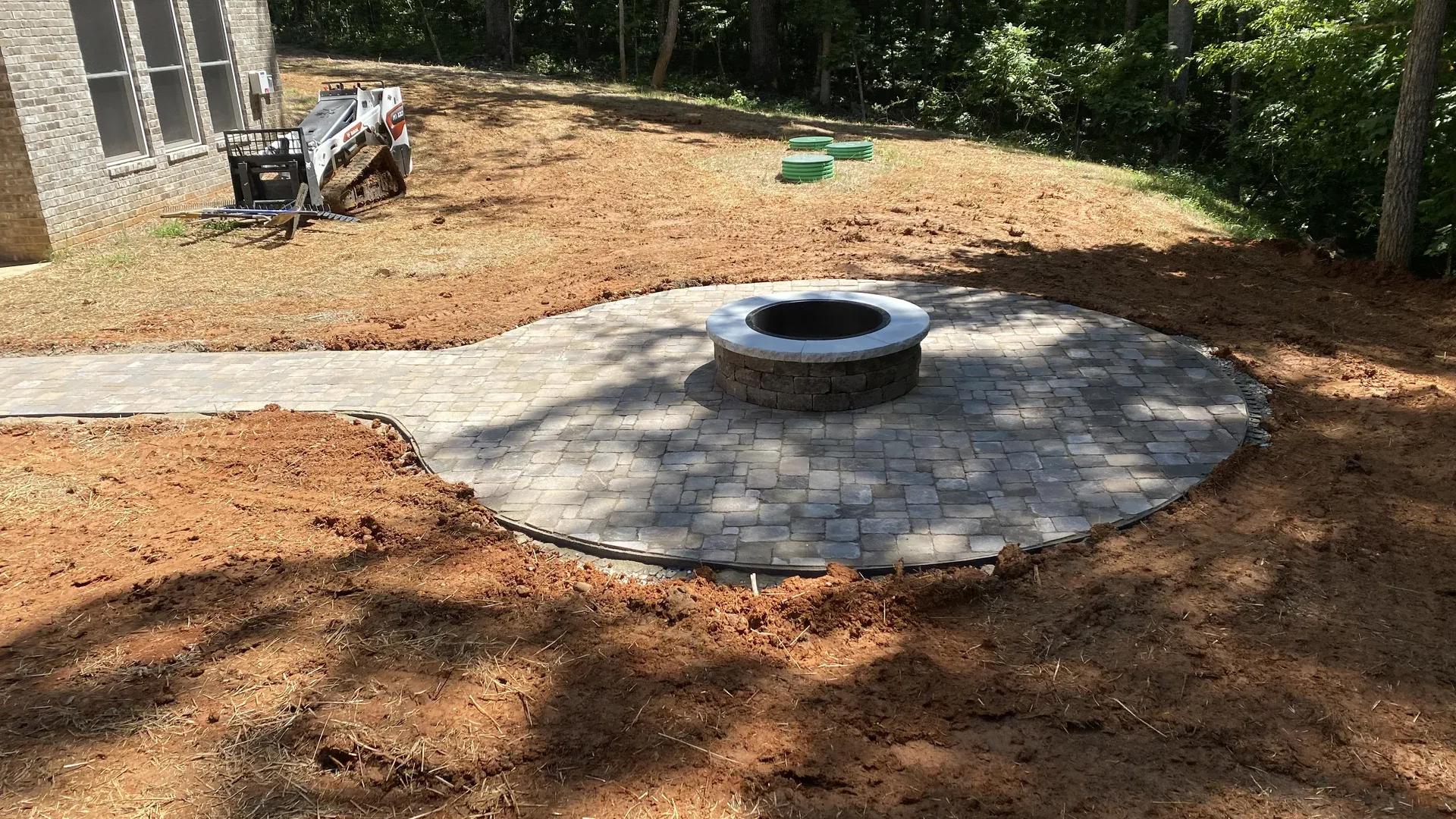
Outdoor fire features are one of the fastest ways to make a patio feel like a true outdoor room. In East Tennessee, they also stretch your usable season, especially on crisp fall nights in Kingston, chilly spring evenings near the lake, and those in-between winter days when the sun is out but the air still bites.
If you are weighing a fire pit vs outdoor fireplace, you are asking the right question. Both options can be beautiful, safe, and long-lasting when they are designed around your yard, your lifestyle, and our local weather patterns. The best choice usually comes down to five practical factors: cost, space, wind and smoke behavior, seating layout, and permitting or code considerations.
In this guide, we will walk through each factor using the same approach we use when we help homeowners plan a patio fire feature design. You will leave with a clear sense of which option fits typical East Tennessee backyards in Knoxville, Loudon, and Roane County, plus what to plan for before you build.
Fire pit vs outdoor fireplace: the core difference (and why it matters in TN)
At a basic level, a fire pit is a low, open flame feature designed for 360-degree gathering. An outdoor fireplace is a vertical structure that directs flame and smoke upward through a firebox and chimney, creating a strong visual focal point and a more “room-like” feel.
In East Tennessee, that difference matters because our outdoor living spaces often have to do multiple jobs:
- Handle variable winds that shift with storms moving through the valley
- Cope with humidity that can affect wood storage, soot, and cleanup
- Work in backyards that may be smaller in newer subdivisions, or sloped near lakes and creeks
- Fit around existing hardscapes like paver patios, seat walls, steps, and retaining walls
When we design a hardscape fire feature, we start by asking how you want to use the space. Are you picturing a casual circle of chairs and s’mores, or a defined lounge area with a TV wall and built-in seating? Both can be done well, but they typically point toward different fire feature types.
Cost comparison: what changes the price for fire pits and fireplaces
Homeowners often start with budget, and it is smart to do so. There is no single “average” that fits every yard, but we can outline what drives cost so you can compare options realistically.
Fire pit costs: portable, built-in, and gas conversions
Fire pits span the widest price range.
- Portable wood-burning fire pits are the lowest entry cost, but they rarely look integrated with the patio and they can create more smoke issues if placed without a wind plan.
- Built-in fire pit ideas (stone or block) cost more up front because you are paying for a proper base, materials, and labor. The upside is a finished look that matches your patio.
- Gas fire pits (natural gas or propane) usually cost more than wood-burning because of the burner kit, ignition, and utility work. That said, many homeowners prefer gas because it is clean, predictable, and easy to use.
In our experience, the biggest cost swings for a built-in fire pit are:
- Size and shape (simple round is typically less complex than custom geometric designs)
- Material selection (premium stone veneer vs standard block with cap)
- Gas line distance and trenching (especially if the patio is far from the house)
- Patio modifications (cutting in, extending pavers, or rebuilding sections for proper support)
If your fire pit will sit on pavers, the base matters. East Tennessee freeze-thaw cycles and heavy rain can shift poorly built patios. If you want to understand what “done right” looks like under the surface, our guide on Paver Patio Base in East TN: Depth, Stone & Compaction Tips explains the details.
Outdoor fireplace cost: structure, chimney, and footprint
- A reinforced footing or slab area designed for the load
- A firebox (often modular) and a chimney system
- Veneer or facing materials to match the rest of the hardscape
- Potential extras like a hearth extension, wood storage niche, or integrated seating walls
Fireplaces can be a great investment when you want a strong focal point and a more controlled flame, but they are rarely the most budget-friendly way to add fire to a space.
A practical budget tip for East Tennessee yards
If you are trying to balance cost with a finished look, we often recommend this approach:
- Prioritize a well-built patio and drainage first
- Add a built-in fire pit that matches the hardscape
- Leave room for future upgrades (seat walls, lighting, or even a fireplace later)
That “phase it smart” plan is common in our area, especially in neighborhoods around Knoxville where homeowners want a polished outdoor living space without doing everything at once.
Space and layout: what fits typical East Tennessee backyards
Space is where the fire pit vs outdoor fireplace decision becomes obvious.
Fire pits: flexible and social, but they need clearance
Fire pits work well in many yard shapes because you can build them in the center of a patio and design seating around them. They are ideal for:
- Smaller patios where you still want a gathering point
- Open layouts where guests can move around freely
- Multi-use spaces where the fire feature is not the only focal point
What people underestimate is clearance. You need space for:
- The fire pit itself
- A comfortable ring of seating
- A safe walking path behind chairs
As a rule of thumb, if you want to seat 6 to 8 people comfortably, you need more patio area than many homeowners expect. This is where a patio fire feature design really pays off, because a few feet in the wrong direction can make the whole space feel cramped.
Outdoor fireplaces: bigger footprint, stronger “room” feel
Outdoor fireplaces take up more visual and physical space. They are best when you can dedicate a wall or edge of the patio to the structure. They shine in:
- Long, rectangular patios where you want a destination at one end
- Spaces with a defined lounge area (sofas, sectionals, dining nearby)
- Yards where you want privacy (a fireplace wall can block views from neighbors)
In many East Tennessee backyards, especially in newer subdivisions in Knoxville and Lenoir City, the limiting factor is depth. If the patio is shallow, a fireplace can crowd the seating zone.
When we are planning a full outdoor living build, the fire feature often ties into the rest of the hardscape. That is why we treat it as part of the overall Hardscaping plan, not a last-minute add-on.
Wind and smoke behavior: the make-or-break factor in Tennessee
If you have ever sat around a smoky fire on a breezy night, you already know why this section matters.
East Tennessee weather can shift quickly. In the same evening, wind can funnel through a gap between houses, come off the water near Fort Loudoun Lake, or swirl as a storm front approaches. Fire features respond differently to that.
Fire pits: more affected by wind, more smoke in faces
Wood-burning fire pits are the most sensitive to wind. Because the flame is open and low, smoke can roll sideways and follow seating patterns. A few ways we design around that:
- Place the fire pit where wind is less likely to tunnel (not directly between the house and a fence line)
- Use seat walls or landscape elements as wind breaks
- Consider gas if smoke sensitivity is a concern
Gas fire pits still have wind effects on flame, but smoke is not the issue. For many families, that is the deciding factor.
Outdoor fireplaces: better smoke lift, but not immune
An outdoor fireplace typically lifts smoke up and away more effectively because of the chimney. That can make the seating area more comfortable, especially for homeowners who want to entertain often.
However, fireplaces are not magic. If the chimney is too short, if the firebox is poorly designed, or if the fireplace is placed where wind creates downdrafts, you can still get smoke problems.
This is where professional design matters. We look at:
- Prevailing wind direction relative to the house
- Rooflines and corners that create turbulence
- The height and proportions of the fireplace
If you want a fire feature you will actually use, designing for wind is just as important as picking stone color.
Seating and how you actually gather: circles vs “living room” layouts
Choosing between a fire pit and a fireplace is also about how your family and friends naturally sit.
Fire pit seating: 360-degree conversation
- S’mores nights with kids
- Casual get-togethers where people rotate in and out
- Flexible seating like Adirondack chairs or movable lounge chairs
If you want built-in seating, a seat wall can help define the space and reduce the number of loose chairs. That can be especially helpful on sloped yards where you want more structure.
Fireplace seating: anchored and directional
- Sofas or sectionals facing the fireplace
- A coffee table zone in the middle
- Optional chairs angled in for conversation
This layout is excellent if you want to mount a TV, add an outdoor kitchen nearby, or create a true lounge. If you are also planning cooking and entertaining features, our post on Outdoor Kitchen Ideas for Knoxville Homes (Budget to Luxury) can help you think through adjacency and spacing.
A real-world East Tennessee scenario we see often
In Roane County lake-area homes, we often see two different goals:
- Homeowners who want a flexible hangout spot after being on the water usually prefer a fire pit because it is casual and group-friendly.
- Homeowners who want a more finished “resort patio” feel often choose a fireplace because it anchors the lounge area and looks great from inside the home.
Neither is wrong. The right choice is the one that fits how you live.
Permitting, codes, and safety: what to check before you build
Permitting and code requirements can vary by jurisdiction, and they can change over time. We always recommend confirming local rules before construction. This is not legal advice, but it is a practical checklist based on what we commonly see in our region.
Common items that trigger permits or inspections
Depending on where you live in East Tennessee, these factors may require permits, inspections, or professional documentation:
- Gas lines (especially natural gas) and any changes to existing utilities
- Electrical for ignition systems, lighting, or outlets near the fire feature
- Structural footings for heavy masonry fireplaces
- Proximity to structures (house, deck, fence) and property lines
If you are in Roane County, Knoxville, or Loudon, the best first step is to identify which authority has jurisdiction (city vs county) and ask what is required for your specific scope.
Safety planning we use on every fire feature
Regardless of permits, we design for safe, comfortable use:
- Maintain appropriate clearances from combustible materials
- Use non-combustible caps and surfaces around the flame
- Plan a stable walking surface and lighting for night use
- Consider drainage so water does not pool around the base
If your patio or surrounding landscape needs ongoing care to stay safe and clean, our Property Maintenance team can help keep the space in shape after installation.
Which option fits typical East Tennessee backyards (our recommendations)
Homeowners across Kingston, Knoxville, Loudon, and surrounding communities often ask us what we would choose if it were our own yard. Here is the honest answer: it depends on constraints and priorities, but patterns do show up.
Choose a fire pit if you want:
- The most social gathering setup
- More flexibility in small to mid-size patios
- A lower overall investment compared to a full fireplace
- A feature that pairs well with seat walls, pavers, and landscape lighting
Choose an outdoor fireplace if you want:
- A strong focal point and a more “outdoor room” feel
- Better smoke lift for wood-burning use in many conditions
- A directional layout that supports a lounge and TV wall concept
- Added privacy and visual screening from neighbors
Fireplaces are also a great option when the patio backs up to an open view. The vertical structure frames the space and can make the whole backyard feel more intentional.
When a hybrid approach makes sense
In some larger outdoor living projects, homeowners choose both, but in different zones. For example:
- A fireplace near the main lounge area
- A smaller fire pit in a secondary seating circle farther out
We do not recommend trying to squeeze both into a typical subdivision patio. It usually compromises circulation and seating comfort.
Design details that make either choice look high-end (and work better)
Whether you land on a fire pit or a fireplace, the details determine how well it performs over time.
Material selection that fits East Tennessee conditions
Our climate includes heavy rain, humidity, and periodic freeze-thaw cycles. We look for:
- Dense, durable capstones that resist spalling
- Proper jointing and construction methods for masonry
- Drainage planning so water does not sit behind or under structures
If your fire feature is built into a paver patio, sealing can be helpful in the right situation, especially for stain resistance near food and drinks. For an honest take on pros and cons in our climate, read Paver Sealing in East Tennessee: Do You Need It (Really)?.
Drainage and base prep (especially important for fire pits)
We plan:
- Proper excavation depth and compaction
- Stone base and bedding layers suited for local soils
- Surface grading so water sheds away from the feature
Maintenance planning so it stays enjoyable
Every fire feature needs some upkeep.
- Wood-burning features need ash management and occasional cleaning
- Gas features need burner inspection and keeping ports clear
- Surrounding patios benefit from periodic washing and joint sand touch-ups
If you want a seasonal checklist tailored to our region, our post on Outdoor Living Space Maintenance in Knoxville: Year-Round Guide is a great companion read.
Conclusion: pick the fire feature you will use most, not just the one that looks best
When homeowners compare a fire pit vs outdoor fireplace, we encourage them to think beyond the photo they saved online. In East Tennessee, success comes down to comfort and usability in real conditions, including wind shifts, damp weather, and the way your family actually gathers.
If you want a flexible, social centerpiece, a built-in fire pit is often the best fit for typical Knoxville, Loudon, and Roane County backyards. If you want a bold focal point with a true outdoor room feel, an outdoor fireplace can be worth the larger footprint and higher investment.
If you would like a professional layout and material plan that fits your yard, we can help. Explore our Hardscaping services, or reach out to our team in Kingston to talk through options and next steps for your patio fire feature design.


