

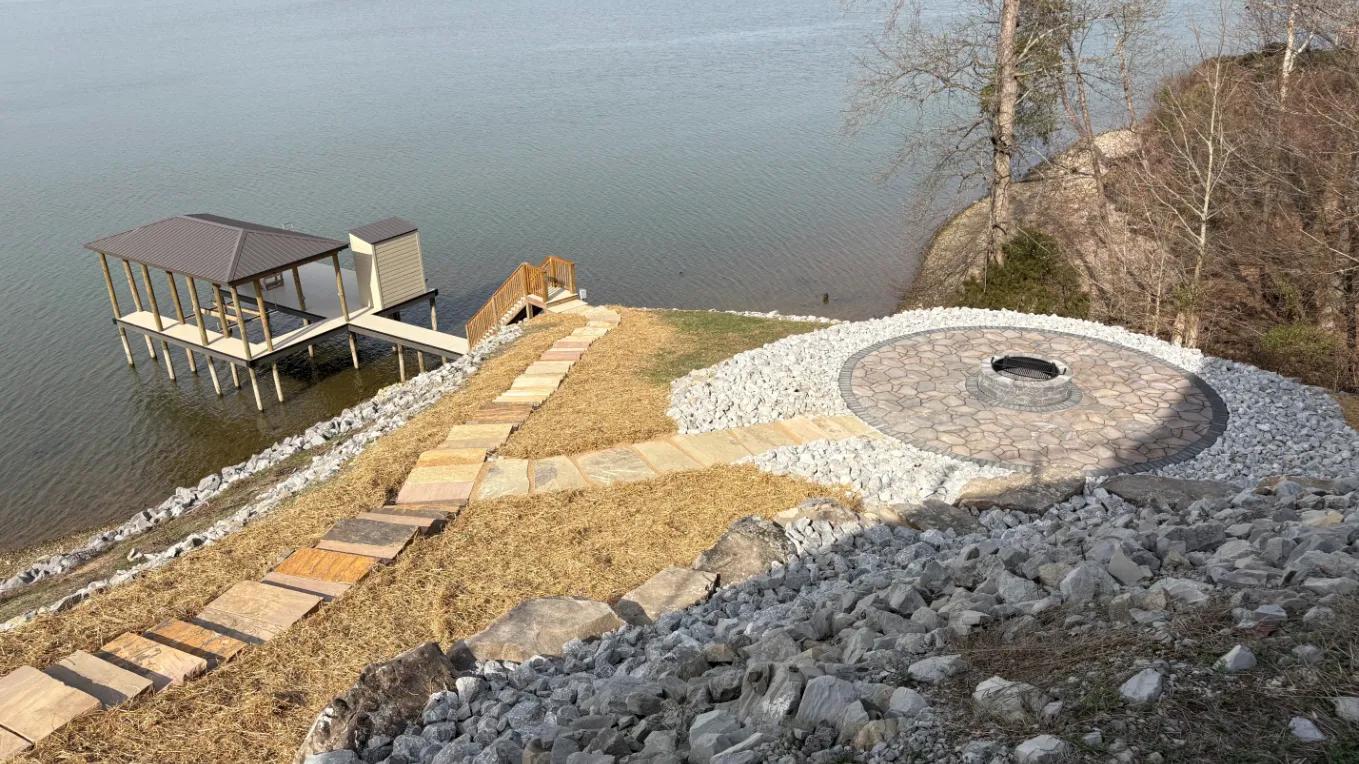
Outdoor living spaces in Knoxville take a beating. We get heavy spring rains, humid summers, falling leaves that stain hardscapes, and winter freeze-thaw cycles that can loosen pavers, crack mortar, and push water where it does not belong. If you already have a patio, seating wall, fire feature, and landscape beds, maintenance is the difference between a space that looks better every year and one that slowly turns into costly repairs.
In this year-round guide, we are sharing the same practical routine we use when we inspect and maintain outdoor living areas across the Knoxville area. You will learn a patio maintenance checklist by season, how to spot drainage problems early, when polymeric sand upkeep matters most, and the best timing for paver sealing in Tennessee. We will also cover safe hardscape cleaning tips, how to prevent patio weeds without damaging joints, and what to do after big rain and cold snaps.
Why Knoxville weather is tough on patios and outdoor living areas
Knoxville sits in a zone where water management and temperature swings matter. In many neighborhoods, we also see clay-heavy soils that hold moisture longer than people expect. Put those factors together and you get a few common problems:
- Freeze-thaw patio care is not optional. Water that gets into joints, small cracks, or behind walls can freeze, expand, and shift materials. Even a small low spot can turn into a recurring puddle and then into movement.
- Heavy rain tests your drainage. Water should move away from the house, away from retaining structures, and off the patio surface without eroding beds.
- Organic debris stains and feeds growth. Leaves, pollen, and mulch fines hold moisture. That moisture helps algae and moss, and it can also soften joint sand.
- DIY pressure washing can do real damage. We often see joint sand blown out, etched concrete, and loosened caps on seating walls because the wrong nozzle and pressure were used.
From our perspective as a hardscaping and landscaping contractor based in Kingston, Tennessee, the goal is simple. Keep water moving where it should, keep joints full and stable, and protect surfaces before they absorb stains or moisture.
If you ever want a pro to look at your patio, walls, or drainage as a complete system, our team handles Hardscaping and ongoing Property Maintenance for homeowners throughout Knoxville and nearby communities.
The baseline routine that prevents most repairs
Before we get into the seasonal checklist, it helps to know the four maintenance categories that matter all year.
1) Keep surface water moving
- Clear debris from patio edges, channel drains, and any swales.
- Confirm downspouts discharge away from the patio and foundation.
- Watch for new low spots where water stands longer than 24 hours.
If you are dealing with chronic sogginess, it is worth learning the difference between solutions like a French drain and a dry creek bed. Our comparison guide is here: French Drain vs. Dry Creek Bed for East TN Drainage.
2) Protect the joints (pavers and segmental walls)
Most paver patios and walkways rely on joint material to lock units together. In East Tennessee rain, joint sand can migrate or wash out at edges and low points.
- Sweep joints seasonally.
- Refill low joints before weeds take hold.
- Address edge restraint issues early, because drifting edges are a sign the system is losing lock.
This is where polymeric sand upkeep comes in. Polymeric sand is not a set-it-and-forget-it product. It performs best when it is installed correctly, kept topped up, and not blasted out during cleaning.
3) Clean safely, not aggressively
Hardscape cleaning tips that actually protect your investment:
- Use a leaf blower or stiff broom routinely to keep organics from breaking down on the surface.
- Start with the gentlest cleaning method first (mild detergent, soft brush, low-pressure rinse).
- Avoid harsh acids on concrete or natural stone unless you know the material and have tested in an inconspicuous area.
4) Seal only when conditions and materials are right
Paver sealing Tennessee timing is usually a warm, dry window, and it depends on the paver type and joint material.
- Sealing too soon can trap moisture and cause haze.
- Sealing right before a rainy stretch can weaken performance.
- Some surfaces do better with no sealer at all, especially if slip resistance is a concern.
If you are unsure whether sealing is worth it for your patio type, it helps to understand how the base and drainage affect durability. This related read goes deeper: Paver Patio Base in East TN: Depth, Stone & Compaction Tips.
Outdoor living maintenance Knoxville checklist by season
Use these as a practical, repeatable routine. If you do not want to do everything, focus on drainage, joints, and debris removal first. Those three prevent most expensive issues.
Spring (March to May): reset after winter and prepare for heavy rain
Spring is when we see the most hidden damage show up. The ground is saturated, joints may be low from winter movement, and the first algae blooms start in shaded areas.
Patio and paver surfaces
- Inspect for heaving or settling. Walk the patio slowly and feel for rocking pavers, lip edges, or new dips. Mark any areas that hold water.
- Gentle wash, then evaluate. Rinse off winter grime. If you have algae, use a cleaner labeled for your surface type and follow dwell time instructions.
- Check edge restraints. If the outer row is spreading, joint material will not hold long.
Polymeric sand upkeep (spring priority)
Spring is a great time to correct joints before weeds and ants move in.
- Sweep sand into joints where levels are low.
- If you have polymeric sand and you see joint gaps deeper than about a quarter inch, plan a re-sanding window.
- Avoid applying polymeric sand if rain is expected soon. It needs a dry install window and proper activation.
Seating walls and steps
- Look for cap stones that feel loose or have opened joints.
- Check for efflorescence (white haze) or water staining that suggests moisture movement behind the wall.
- Confirm steps drain away and do not funnel water onto the patio.
If your outdoor space includes walls on a slope, drainage is what keeps them stable. This guide explains what proper wall drainage looks like: Retaining Wall Drainage: Gravel, Pipe and Weep Holes Explained.
Fire features
For a gas fire pit or fireplace:
- Inspect burner ports for debris and spider webs.
- Check ignition components and battery compartments.
- Confirm the unit drains, especially if it is in a low area.
For wood-burning features:
- Remove ash and check for cracked firebrick or shifted blocks.
- Make sure water is not pooling in the burn chamber.
Landscape beds around hardscapes
- Recut bed edges so mulch does not wash onto pavers.
- Topdress mulch carefully and keep it off the patio surface.
- Confirm downspouts and splash blocks are not eroding beds next to the patio.
If you want a broader spring routine for the region, our local checklist is helpful: Spring Yard Cleanup Kingston TN Checklist (Pro Tips Included).
Summer (June to August): control growth, stains, and shifting from storms
Summer maintenance is about keeping surfaces safe and joints intact while storms hit hard.
Hardscape cleaning tips for heat and humidity
- Blow off leaves, seed pods, and grass clippings weekly. Organic matter becomes a stain source fast.
- Spot clean spills quickly, especially grease near grills and outdoor kitchens.
- In shaded areas, treat algae early rather than letting it build a slick layer.
If you are using a pressure washer:
- Keep pressure low, use a wider fan tip, and do not aim directly into joints.
- Never pressure wash polymeric sand joints aggressively. That is the fastest way to create gaps and invite weeds.
Prevent patio weeds without damaging joints
Weeds are usually a symptom of joint loss and organic buildup, not a failure of the paver itself.
- Pull small weeds after rain when roots release more easily.
- Use targeted spot treatment rather than blanket spraying. Avoid runoff into beds.
- Keep joints filled. A full joint is your best weed prevention.
Check drainage after big storms
In Knoxville, one summer downpour can reveal issues you will never see in a light rain.
- Watch where water flows off the patio. It should not cut channels into beds.
- Look for sediment deposits. If you see sand or base material washing out, address it promptly.
- Confirm that water is not flowing toward the house.
For lawn and soil damage after heavy rain, this related Knoxville article can help you time mowing and avoid ruts that lead to runoff problems: Lawn Care After Heavy Rain in Knoxville: Prevent Mud & Ruts.
Summer sealing considerations
Many homeowners ask us about paver sealing in Tennessee during summer. The key is choosing the right week.
- Aim for a stretch of dry weather and moderate temperatures.
- Make sure the patio is fully dry, including joints, before sealing.
- If you have recently installed polymeric sand, follow the manufacturer cure time before sealing.
We are careful here because sealing can improve stain resistance and color, but it can also increase slipperiness on some surfaces and trap moisture if applied at the wrong time.
Fall (September to November): leaf management and pre-winter protection
Fall is the season that quietly causes a lot of surface staining in outdoor living spaces. It is also your best chance to prep for freeze-thaw.
Leaf and tannin stain prevention
- Blow off leaves at least weekly, more often during peak drop.
- Do not let wet leaves sit on pavers, concrete, or natural stone. Tannins can stain.
- Clean gutters so overflow does not dump water onto patios and beds.
Joint and edge check before winter
Use this quick patio maintenance checklist:
- Sweep and top up joints.
- Look for edge movement or spreading.
- Confirm any joint cracks on concrete are not widening.
If you see minor separation now, it is cheaper to correct before winter freezes lock the problem in place.
Bed cleanup that protects hardscapes
- Cut back perennials and remove spent annuals so they do not drop debris onto the patio.
- Refresh bed edges so mulch stays in place.
- Make sure downspout extensions are still connected and aimed correctly.
If you are considering edging upgrades that reduce washout and make mowing easier, this Knoxville comparison is useful: Landscape Bed Edging in Knoxville: Metal vs Plastic vs Stone.
Winter (December to February): freeze-thaw patio care and safe de-icing
Winter maintenance is about minimizing water intrusion and avoiding damage from de-icers and tools.
Snow and ice practices that protect pavers and stone
Knoxville does not get constant snow, but we do get ice events. When you need traction:
- Use a plastic shovel blade to avoid chipping edges.
- Avoid metal-edged tools on pavers and some natural stone.
- Use sand for traction when possible.
De-icer cautions
Not all de-icers are equal. Some can damage concrete, accelerate surface scaling, or leave residue.
- Avoid using de-icer as a routine habit. Use it only when needed for safety.
- If you must use a product, follow label guidance for your surface type.
- Rinse residues when temperatures allow.
Winter drainage and pooling checks
Freeze-thaw patio care starts with water control.
- After a thaw, check low spots for standing water.
- Watch for ice sheets forming where downspouts discharge.
- Make sure channel drains are not clogged with frozen debris.
If you see repeated ice in the same area, that is usually a grading or discharge issue, not just weather.
Sealing, re-sanding, and repairs: when to do what
Homeowners often ask us which maintenance items are truly necessary and which are optional. Here is how we prioritize.
When to re-sand joints (especially polymeric sand)
Re-sanding is usually the right move when:
- Joints are consistently low and collect debris.
- You see ants, weeds, or shifting pavers at edges.
- You have washed out sand from cleaning or storms.
For polymeric sand upkeep, the details matter. The surface must be clean and dry, joints must be at the correct depth, and activation must be even. Too much water can wash binder out. Too little water can prevent proper set.
If you are not sure whether you need spot re-sanding or a more complete refresh, we can evaluate the patio as part of our Property Maintenance approach.
When paver sealing in Tennessee makes sense
Sealing can help with:
- Stain resistance near grills and outdoor kitchens
- Color enhancement and easier cleaning
- Reducing water penetration on some pavers
But we also advise caution:
- Some sealers can create a sheen that shows scuffs or becomes slippery.
- Sealing over damp joints can cause haze or bonding issues.
- If drainage is poor, sealing does not fix the underlying water problem.
When cleaning becomes restoration
If a patio has heavy organic staining, algae buildup, or joint failure, simple rinsing will not get you back to a safe, attractive surface.
Signs you may need a deeper reset:
- Persistent slick areas in shade
- Multiple loose pavers or trip edges
- Widespread joint loss
- Water pooling that has gotten worse over time
At that point, cleaning, re-sanding, and spot leveling are often more cost-effective than waiting for a full rebuild.
A practical inspection list you can run in 15 minutes
We use a version of this walk-through when we arrive on-site for outdoor living maintenance Knoxville homeowners request.
- Walk the patio perimeter. Look for spreading edges, gaps, and washout.
- Check slopes and puddles. Any standing water after 24 hours is a red flag.
- Inspect joints. Are they full, or can you see deep gaps?
- Look at transitions. Steps, door thresholds, and grill pads show movement first.
- Check walls and caps. Wiggle test for loose caps and look for staining.
- Confirm drainage paths. Downspouts, swales, and drains should be clear.
- Scan beds next to hardscapes. Mulch should not be piled against edges or washing onto pavers.
Write down what you find and take photos. If something changes from season to season, that pattern helps diagnose the cause.
Conclusion: protect your outdoor investment with a seasonal routine
If you would like a professional set of eyes on your patio, seating walls, fire feature area, and surrounding beds, we are here to help. Our team serves Knoxville and the surrounding area with Hardscaping, Landscaping, and Property Maintenance. Contact us through https://www.gorocksolid.com/ and we can recommend a maintenance plan that fits your materials, drainage, and how you use the space.


