

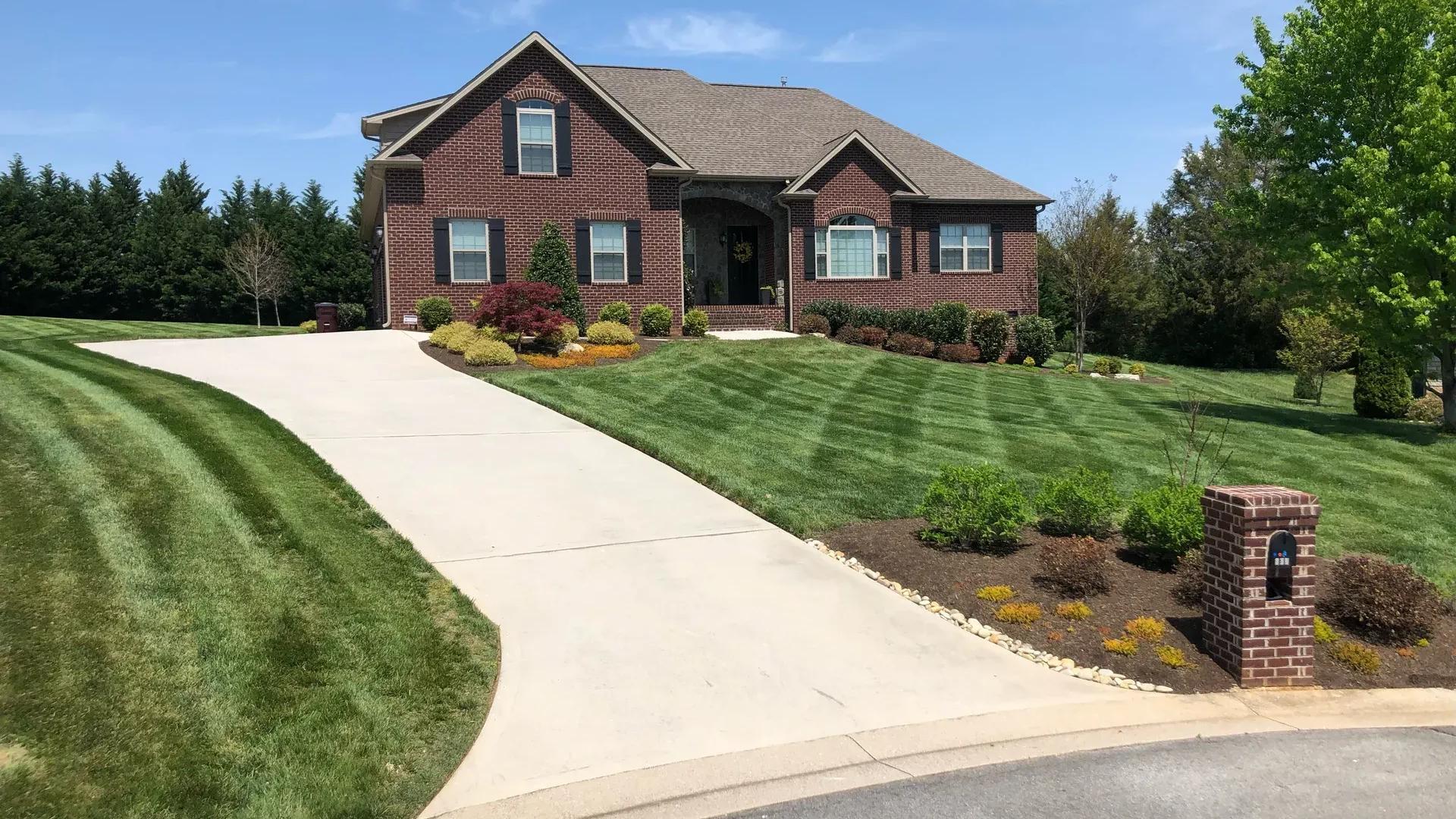
Choosing between sod and seed is one of the biggest make or break decisions you can make when renovating a thin, patchy, or damaged lawn in East Tennessee. We see it every week around Kingston and across the region: homeowners invest time and money, then a hot spell, heavy rain, or a busy backyard derails the results. The good news is that both options can work here if you match the method to your yard conditions, your timeline, and how you actually use the space.
In this guide, we will compare sod vs seed in East Tennessee using the factors that most affect real-world outcomes: installed cost, seasonal timing, soil preparation for lawn establishment, watering schedule for a new lawn, and what success rates look like in our climate. We will also share a practical decision framework for high-traffic yards, pets, and shaded areas, because those are the situations where the wrong choice gets expensive fast.
If you want a lawn that holds up to East Tennessee summers, clay soil, and day-to-day life, start here, then decide whether you need instant coverage (sod) or a lower-cost approach (seeding) that takes more patience.
Sod vs seed East Tennessee: what is actually different?
At a high level, sod is mature turf grass that has already been grown, cut into rolls or slabs, and installed like a living carpet. Seeding is the process of spreading grass seed, then nurturing it through germination and early growth until it becomes a dense, usable lawn.
In practice, the differences that matter most in East Tennessee come down to three things.
1) Speed and usability
- Sod gives you near-instant green coverage. With good installation and watering, it can handle light foot traffic sooner than a seeded lawn.
- Seed takes time. Even when germination is fast, the lawn is not truly usable until it has been mowed several times and developed roots.
2) Risk profile in our weather
Our region can swing quickly from soaking rains to dry heat, especially in late spring and summer. That volatility changes the lawn establishment success rate.
- Sod is less vulnerable to washouts because the grass is already knitted together.
- Seed is more vulnerable to heavy rain, crusting clay, and drying winds during the tender germination window.
3) Upfront cost vs total effort
- Sod typically costs more upfront but reduces the time your yard is “under construction.”
- Seed costs less upfront, but the margin for error is smaller, and the watering and protection requirements are higher for longer.
If you are also deciding on grass type, our local comparison of fescue and bermuda can help you narrow the target before you pick a method: Best Grass for East Tennessee Lawns: Fescue vs Bermuda.
Cost to sod vs seed: what homeowners in East Tennessee should budget for
The cost to sod vs seed is not just the material. The biggest price swings usually come from prep work and access. In Kingston, Roane County, Knoxville, Lenoir City, Loudon, and Oak Ridge, we commonly see clay-heavy soils, grading quirks, and drainage patterns that require more than a quick rake.
Typical cost ranges (installed)
Prices vary by grass type, site access, and prep requirements, but these ranges are realistic planning numbers for many East Tennessee residential yards.
- Sod installation: often $1.50 to $3.00+ per square foot installed.
- Higher end if you need significant grading, soil import, or tight access.
- Seeding (new lawn): often $0.15 to $0.50+ per square foot installed.
- Higher end if you need heavy soil amendment, erosion control blankets, or irrigation setup.
What drives the price either way
Whether you choose sod or seed, the following items are where budgets move:
- Soil preparation: removing rocks, loosening compacted clay, adding topsoil or compost, and final grading.
- Erosion control: slopes that need straw, tackifier, or blankets to prevent washout.
- Irrigation access: hose coverage, timers, or an irrigation system.
- Weed pressure: existing weeds and old turf that should be killed off before starting.
From our perspective, the most expensive lawn is the one you have to do twice. If you are unsure whether your yard needs grading, drainage corrections, or a full renovation, our Landscaping team can evaluate the site and recommend a plan that fits East Tennessee conditions.
Best time to seed East TN and when sod makes the most sense
Timing is where we see the biggest difference in success rates. East Tennessee has humid summers, clay soils that can seal over, and weather patterns that can shift quickly. You can install sod or seed in multiple seasons, but the odds change.
Best time to seed East TN (cool-season lawns like tall fescue)
For many homeowners in our area, tall fescue is the go-to for greener shoulder seasons and better shade tolerance.
- Primary window: late August through October
- Warm soil helps germination.
- Cooler air reduces disease pressure and water stress.
- Secondary window: late February through early April
- Spring seeding can work, but weeds and summer heat often reduce the lawn establishment success rate.
If you want a date-by-date approach for aeration and overseeding, we laid out a practical local calendar here: When to Aerate & Overseed Lawns in East Tennessee (A Practical Calendar for Thick, Healthy Turf).
When sod is the safer bet
Sod can be installed in spring, summer, and fall, but we still prefer seasons where roots can establish without extreme stress.
- Best windows for sod: spring and fall
- Summer sod: possible, but only if watering is reliable and the site is prepped correctly
If you want a deeper seasonal breakdown, see: When to Install Sod in East TN: Best Timing and Prep for a Rock Solid Lawn.
A quick rule we use in the field
- If you need a lawn that looks good fast for an event, listing photos, or a new build closeout, sod is usually the practical choice.
- If your timeline is flexible and you can commit to daily watering during germination, seed can deliver excellent results at a lower cost.
Soil preparation for lawn: the step that controls success rates
In East Tennessee, soil prep is not optional. Our clay soils can compact easily, hold water in winter, and crack in summer. Both sod and seed fail when roots cannot move into the soil.
Here is the prep sequence we rely on for consistent results.
1) Fix drainage and grading before anything else
If water sits for hours after a rain, or if downspouts dump into the lawn, you will fight disease, thinning, and muddy traffic patterns.
- Regrade low spots when possible.
- Route downspouts away from turf.
- Address chronic soggy areas before installing sod or seed.
If your yard stays wet, this local guide can help you understand options that do not require regrading everything: How to Fix a Soggy Yard in Loudon Without Regrading Everything.
2) Remove debris and loosen the soil
We regularly uncover construction debris, rocks, and compacted subsoil in newer neighborhoods.
- Remove rocks, roots, and buried scraps.
- Loosen the top 3 to 6 inches of soil.
- Break up clods so the surface is not lumpy.
3) Add organic matter and correct the surface
- In many lawns, 1 to 2 inches of compost blended into the top layer is a strong starting point.
- Final grade should be smooth, with a slight slope away from the home.
4) Soil testing and pH (often ignored)
We recommend a soil test when you are making a major investment. Many East Tennessee lawns benefit from lime to adjust pH into a grass-friendly range.
- Correcting pH improves nutrient availability.
- Balanced fertility supports rooting and density.
5) Firm the seedbed or sod base
- For seed, a lightly firmed surface improves seed-to-soil contact.
- For sod, a firm, smooth base prevents air pockets that dry out roots.
If you want a professional install that includes grading, prep, and long-term durability, our Property Maintenance team can help keep the lawn on track after establishment with mowing, seasonal care, and corrective services.
Watering schedule new lawn: sod vs seed requirements in real life
Watering is where most DIY renovations succeed or fail. In our climate, a few missed days can set you back weeks, especially on sunny slopes or in compacted clay.
Watering schedule for new sod
The goal is to keep the sod and the top inch of soil consistently moist while roots knit into the native soil.
- Days 1 to 7: water 2 to 4 times per day in short cycles, enough to keep the sod damp without puddling.
- Days 8 to 14: water once per day, a bit deeper.
- Weeks 3 to 4: transition to deeper, less frequent watering (every 2 to 3 days depending on weather and soil).
- After establishment: aim for deep watering that encourages roots to chase moisture.
Field tip we use: gently tug a corner after about 10 to 14 days. If it resists, roots are starting to anchor.
Watering schedule for new seed
Seed requires a different strategy because the seed must stay consistently moist to germinate.
- Germination phase: water 2 to 4 times per day, very lightly. The surface should stay damp.
- After sprouting: reduce frequency slowly, increase depth.
- After first mow: start training roots with deeper watering every few days.
Two important cautions:
- Too much water can cause seed to move, especially on slopes.
- Too little water can kill seedlings quickly in sun and wind.
Irrigation reality check
If you cannot cover the whole lawn evenly with hoses and sprinklers, sod may actually be the safer investment, even with higher upfront cost. If you are considering a system, this guide can help you think through it: Irrigation Systems in East Tennessee: Do You Need One?.
Lawn establishment success rate: what to expect in East Tennessee
Homeowners often ask us for a simple percentage, but success rates depend on season, prep, watering consistency, and site conditions. That said, we can speak from experience across Roane County and the surrounding areas.
Sod success rate (typical outcomes)
With proper soil prep and disciplined watering, sod has a high success rate because you start with mature turf.
- Best-case: strong knit and uniform lawn in 3 to 6 weeks.
- Common failure points: poor contact with soil, underwatering during the first 10 days, installing over compacted clay without loosening.
Seed success rate (typical outcomes)
Seeding can be extremely successful, especially in fall, but the early phase is fragile.
- Best-case: visible germination in 7 to 21 days (varies by grass type and temperature), then thickening over 6 to 12 weeks.
- Common failure points: washouts, inconsistent moisture, weed competition, seeding too late in fall or too late in spring.
How clay soil changes the odds
Clay holds water but can also crust on top, which blocks seedlings and restricts oxygen.
- For seed, topdressing with a light layer of compost helps prevent crusting.
- For sod, improving the top layer helps roots move down instead of staying shallow.
A realistic expectation we set
Even with good work, new lawns are not “finished” in a month. They are establishing. Your mowing height, traffic management, and fertilization timing in the first season matter as much as day one.
Decision framework: high-traffic yards, pets, and shade
This is the section we wish every homeowner would read before buying pallets of sod or bags of seed. Your yard use and microclimates should drive the decision.
If your yard gets heavy foot traffic
Examples: kids playing daily, frequent backyard gatherings, a path from driveway to patio.
We usually recommend sod because it provides immediate coverage and reduces erosion and mud. It also helps you define traffic patterns sooner.
To protect your investment:
- Block off the area for at least 2 to 3 weeks.
- Use stepping stones or a temporary path if you have to cross it.
- Keep mower traffic light until roots are established.
If your traffic is concentrated near patios, walkways, or outdoor living spaces, it may also be worth considering hardscape solutions that reduce wear on turf. Our Hardscaping team often designs small paver transitions or seating areas that save the lawn long-term.
If you have dogs or frequent pet use
Pets change everything because urine spots, digging, and repeated running create localized damage.
What we see work best:
- Sod is usually the better choice for getting a usable yard quickly.
- Seed can work, but you need a longer protected period, and patching is common.
Practical tips:
- Plan a temporary pet area for 3 to 6 weeks.
- Rinse urine spots when possible.
- Expect to do spot repairs, even with sod.
If your lawn is shaded
Shade is common in established neighborhoods around Kingston and Oak Ridge where mature trees create filtered light and root competition.
In shade, success depends more on grass selection and site adjustments than on sod vs seed.
- Fine fescues and shade-tolerant tall fescue blends often outperform sun-loving grasses.
- Improve light by selective pruning when appropriate.
- Reduce competition by improving soil and managing leaf litter.
Sod in shade can look great initially, but it still needs enough light to sustain itself.
Seed in shade can be effective because you can use a tailored mix, but it needs consistent moisture and patience.
If you have slopes or erosion risk
Slopes are where seeding fails most often in East Tennessee storms.
- Sod is typically the safer choice because it stabilizes the soil immediately.
- If you seed a slope, plan on erosion control blankets and careful watering.
If you need results fast for curb appeal
If you are listing your home, hosting a graduation party, or finishing a new build, sod is often the only option that matches the timeline.
If you are in Knoxville, Roane County, Lenoir City, Loudon, or Oak Ridge and want a site-specific recommendation, we can look at sun, drainage, and soil conditions and give you a clear plan.
Practical comparison: sod vs seed checklist (East Tennessee edition)
Use this checklist to decide quickly, then validate it against your budget and watering capacity.
Choose sod if:
- You need a finished look quickly.
- Your yard has slopes or erosion concerns.
- You have heavy traffic or pets and cannot keep people off the lawn for long.
- You can water reliably for the first 2 to 3 weeks.
Choose seed if:
- You are renovating on a tighter budget.
- You can commit to frequent light watering during germination.
- You are targeting a specific blend, like fescue seeding in East Tennessee for shade.
- You are seeding in the fall window and can protect the area from traffic.
Either method can succeed if:
- Soil preparation for lawn establishment is done right.
- Drainage issues are corrected.
- You have a realistic watering plan and coverage.
What we recommend for a “Rock Solid” outcome
When we install or renovate lawns in the Kingston area, we focus on repeatable fundamentals that hold up in East Tennessee.
- Start with the right grass for the site (sun, shade, use).
- Do the prep once, do it right (grading, soil improvement, firm base).
- Match the method to your schedule (sod for speed, seed for budget and customization).
- Follow a watering schedule new lawn plan you can actually maintain.
- Protect the lawn from traffic early so roots develop depth.
If you want a professional assessment and installation plan, our team can help with everything from site prep and drainage corrections to installation and ongoing care through our Landscaping and Property Maintenance services.
Conclusion
Sod vs seed in East Tennessee is not a one-size-fits-all choice. Sod costs more upfront, but it delivers fast curb appeal, better erosion resistance, and a higher success rate when you need a usable yard quickly. Seeding costs less and offers more flexibility for blends, including fescue seeding in East Tennessee, but it demands precise timing and a disciplined watering routine.
If you want the best odds, prioritize soil preparation for lawn establishment, choose the right season (especially for seed), and plan a watering schedule you can maintain for several weeks. If you would like us to evaluate your yard in Kingston or nearby communities and recommend the most cost-effective path, reach out through our website and we will help you build a lawn that lasts.


