

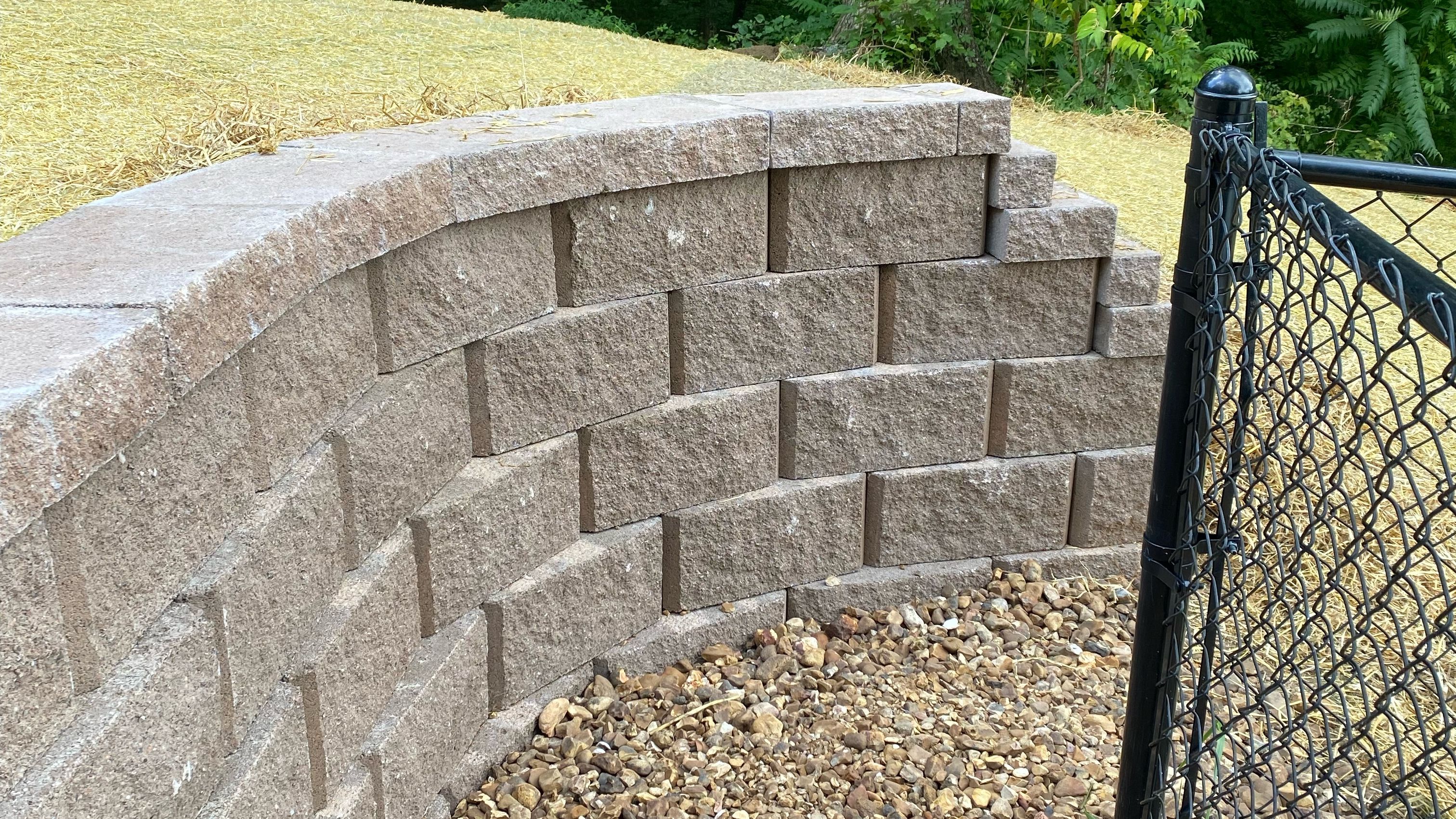
Retaining walls do a lot of quiet work in Oak Ridge. They hold back heavy soil on sloped yards, protect patios and driveways, and help manage runoff during our sudden East Tennessee downpours. When a wall starts to fail, it rarely happens all at once. It usually gives you warnings first, like bulging blocks, stair-step cracks, leaning, or water seeping where it should not. Knowing the signs of a failing wall helps you act early, when repairs are simpler, safer, and less expensive.
In this guide, we will walk through the most common signs retaining wall failing, what typically causes those issues in East Tennessee clay soil, and what solutions actually work. We will also explain when a bowing retaining wall fix is realistic, and when replacement is the safer option. Finally, we will cover practical safety considerations, because a failing wall can become a real hazard to people, structures, and utilities.
If you are in Oak Ridge or nearby in Anderson and Roane County and you are not sure what you are seeing, this post will help you understand risk, timing, and next steps.
Why retaining walls fail in Oak Ridge and East Tennessee
Retaining wall problems are rarely caused by one thing. In our area, we usually see a combination of soil conditions, water pressure, and construction details that were skipped or undersized.
East Tennessee clay soil and hydrostatic pressure
If a wall was built without proper drainage, that pressure has nowhere to go. Even a well-built wall can struggle if drainage is blocked by silt, roots, or crushed pipe.
If you want a deeper primer on what “done right” looks like, we recommend reading Retaining Wall Drainage: Gravel, Pipe and Weep Holes Explained. In our experience, drainage is the difference between a wall that lasts and a wall that becomes a recurring repair.
Freeze-thaw cycles and shifting soils
Oak Ridge gets enough winter temperature swings for freeze-thaw to matter, especially on shaded slopes where moisture lingers. When water in the soil freezes, it expands, then contracts when it thaws. Over time, that movement can loosen backfill, shift blocks, and create voids that let the wall move.
Poor base preparation and compaction
Another common cause is base failure. We see older walls, and sometimes DIY walls, set on soil or a thin layer of gravel without proper excavation depth, compacted base stone, or leveling. When the base settles unevenly, the wall starts to lean or develop cracks.
Added loads and changes after installation
Walls also fail when the conditions change after they were built. Common examples we see around Oak Ridge neighborhoods include:
- A new driveway or parking area added above the wall
- A shed, pool, or hot tub placed near the top
- Heavy equipment repeatedly driving close to the wall edge
- Downspouts redirected to drain behind the wall
- Trees maturing and pushing with roots
Even a wall that was fine for years can start showing problems after one of these changes.
Warning signs your retaining wall is failing
If you are searching “retaining wall repair Oak Ridge TN,” you are probably seeing something that does not look right. Here are the signs we tell property owners to watch for, along with what they usually mean.
Bulging, bowing, or leaning
What it often indicates:
- Water pressure building up behind the wall
- Lack of drainage gravel and pipe
- Inadequate reinforcement for the wall type
- Base settlement or toe failure
Cracks, especially stair-step cracking
Cracks can show up in different ways:
- Vertical cracks in poured concrete
- Stair-step cracks in block or stone
- Separation at corners or returns
Not every crack is an emergency, but cracks combined with bulging or water issues usually point to structural movement. Stair-step cracking in particular often signals differential settlement or lateral pressure.
Water where it should not be
Drainage issues are a big red flag in East Tennessee. Look for:
- Water seeping through joints
- Muddy stains or “weep lines” on the face
- Pooled water at the base
- Erosion or washout at the ends
These symptoms often mean the wall is not relieving pressure properly. Retaining wall drainage solutions are typically the first thing we evaluate because they address the root cause, not just the symptom.
If your whole yard is struggling with water movement, it may also be a grading issue, not just the wall. This is a helpful companion read: Kingston TN Yard Grading: Signs You Need Regrading.
Soil or mulch spilling over the top
If you see soil creeping over the cap, or mulch washing over during storms, it can mean the backfill is moving and the wall is losing its ability to retain grade.
This is common when:
- The top grade slopes toward the wall
- Downspouts dump behind the wall
- There is no swale or surface drainage control
Sinking, tilting caps, or uneven courses
On segmental block walls, shifting caps or uneven block courses are often early indicators. On stone walls, you might notice stones “walking” out of alignment.
When we see this in Oak Ridge, it is often tied to base compaction, poor drainage, or erosion under the footing.
Nearby damage: patios, fences, and steps moving
- Fence posts leaning in line with the wall
- Pavers separating or settling near the top
- Steps becoming uneven
- Cracks in adjacent concrete
Those are clues that the whole slope is moving, not just the wall face.
Common wall types in Oak Ridge and why the fix depends on the type
Before you decide on repair vs replacement, it helps to know what kind of wall you have. Different wall systems handle pressure differently.
Gravity wall vs segmental wall
Two common terms we hear from property owners are gravity wall vs segmental wall.
- A gravity wall relies mostly on its own weight to resist soil pressure. Many older stone walls and some thick concrete walls fall into this category.
- A segmental retaining wall (SRW) is typically a modular block system designed to work with compacted base stone, drainage gravel, and often geogrid reinforcement extending into the slope.
Why this matters: if a segmental wall was built without geogrid when it needed it, or without adequate drainage, it may not be a good candidate for a cosmetic “straighten and stack” repair. In that case, replacement with the correct engineering is often the safer long-term solution.
If you are weighing materials or systems, this related post is a good overview: Retaining Wall Materials: Block vs Stone in East TN.
Timber walls and older construction
We still see timber retaining walls in parts of Anderson and Roane County. They often fail due to rot, fastener corrosion, and drainage problems. Once timber is compromised, repair options are limited, and replacement is usually recommended.
Repair vs replacement: how we evaluate the right next step
The biggest question we get is wall replacement vs repair. The honest answer is that it depends on movement, cause, and risk. Here is how we approach it on-site.
When repair is often possible
Repair can make sense when the wall is structurally salvageable and the failure is localized.
Common repair-friendly situations:
- Minor leaning or bulging with no foundation settlement
- One section displaced due to a localized washout
- Drainage is missing or clogged, but the wall has not shifted significantly
- Caps are loose, but the wall face is stable
Typical repair options include:
- Drainage corrections: adding or rebuilding gravel backfill, installing perforated drain pipe, adding outlets, and ensuring surface water sheds away from the wall.
- Rebuilding a section: removing and reinstalling a portion of the wall with proper base and backfill.
- Regrading at the top: adjusting the slope so water flows away from the wall, not into it.
- Stabilizing ends and returns: reinforcing corners or adding proper terminations to prevent “unzipping.”
In Oak Ridge, drainage improvements are often the best return on investment because they address the pressure that caused the movement.
When replacement is the safer choice
Replacement is usually the right call when the wall is actively failing, the base is compromised, or the wall was never built to handle the loads.
Common replacement indicators:
- Significant bowing or a lean that is worsening
- Multiple cracks across the wall length
- Base settlement, toe kick-out, or sinking courses
- Evidence of saturated backfill and no drainage path
- Wall height and slope conditions that likely require geogrid or engineering
- A wall supporting a driveway, structure, or critical access area
In these cases, patching can buy a little time but often leads to repeated failures. We would rather help you invest once in a correct system than keep chasing symptoms.
A practical “timing” guideline we use
If you notice changes after heavy rain, that is a sign the wall is responding to water pressure. We recommend not waiting through another wet season to “see what happens.” In East Tennessee, one high-rain month can turn a manageable repair into a full replacement.
Retaining wall drainage solutions that actually work in East Tennessee
Because water is such a major driver here, it is worth being specific about drainage. The goal is simple: keep water from building pressure behind the wall, and control surface runoff so it does not saturate the backfill.
Backfill gravel and perforated pipe
- Clean drainage gravel directly behind the wall
- A perforated drain pipe at the base
- A gravity outlet to daylight or a tied-in drainage system
- Filter fabric to reduce silt migration
In clay-heavy soils, we pay close attention to filter fabric placement and outlet protection. If the outlet clogs or gets buried, the system stops working.
Weep holes and face drainage
Some walls use weep holes to relieve water. They can be effective, but they are not a substitute for a full drainage zone and pipe, especially on taller walls.
Surface water management at the top
We often find that the biggest “drainage problem” is not behind the wall, it is above it.
We look for:
- Downspouts dumping near the wall
- Negative grade that funnels water to the wall
- Roof runoff concentrating in one spot
Sometimes the best fix is rerouting downspouts, adding a swale, or installing a collection system.
If you are comparing drainage components for the yard overall, this guide can help clarify options: Catch Basin vs Trench Drain: Outdoor Drainage 101 for East Tennessee.
Safety considerations: when to stop and call a pro
Situations that require urgent evaluation
We recommend treating these as priority issues:
- The wall is leaning noticeably and has changed in the last few weeks
- Blocks or stones are loose and could fall
- The wall supports a driveway, parking pad, or walkway
- There is a visible gap opening behind the wall
- You see sinkholes, voids, or fast-moving erosion
- There are utilities nearby (electric, gas, water)
If you are unsure, avoid letting kids play near the wall and keep heavy equipment away from the top edge.
Permits and engineering considerations
In Tennessee, permitting and engineering requirements can depend on wall height, location, and what the wall is supporting. Even when a permit is not required, engineering can be a smart investment for taller walls or complex slopes.
If you are in Roane County and want a sense of how permitting can come into play, this post is a helpful reference: Retaining Wall Permits in Roane County: What to Know First.
We always recommend checking local requirements for your specific project, especially if the wall is near a property line or affects drainage onto neighboring lots.
What to expect during a retaining wall repair assessment in Oak Ridge
When we evaluate retaining wall repair in Oak Ridge, TN, we try to answer three questions quickly: Why is it moving, how risky is it, and what is the most durable fix for the site.
Here is what we typically look at on a site visit:
- Wall type and height: gravity wall vs segmental wall, and whether reinforcement is likely needed
- Batter and alignment: how much lean or bow exists, and whether it is progressing
- Base condition: signs of toe movement, settlement, or washout
- Drainage evidence: outlet locations, clogged discharge, staining, saturated soils
- Surface water sources: downspouts, slopes, hard surfaces that shed water toward the wall
- Backfill and soil: clay content, compaction, and signs of slumping
- Surrounding features: patios, fences, steps, and any movement that suggests slope instability
We also talk through your goals. Some clients want a quick stabilization to reduce risk this season. Others want a long-term rebuild that improves the whole outdoor space.
If the wall is part of a larger outdoor living area, we can also coordinate improvements through our Hardscaping work so the wall, drainage, and adjacent patios or steps function as one system.
How to reduce the chance of future wall problems
Once a wall is repaired or replaced, a little prevention goes a long way in our climate.
Keep outlets clear and visible
If your wall has a drain outlet, keep it from getting buried by mulch, leaves, or landscaping fabric. After major storms, do a quick check to confirm water can discharge.
Control water from roofs and hard surfaces
Make sure downspouts and sump discharges do not dump behind the wall. If you have a new patio or driveway, confirm it sheds water away from the wall.
Avoid heavy loads near the top edge
We recommend keeping heavy items and repeated vehicle traffic back from the top of the wall. If you need to park equipment up there, it may require a wall designed for surcharge loads.
Maintain the slope and vegetation
Roots can help stabilize soil, but large tree roots can also push and disrupt walls over time. If you are planning new plantings near the wall, choose appropriately sized plants and keep them a safe distance from the structure.
Ongoing upkeep matters too. Many of our clients pair wall care with seasonal inspections and drainage checks through our Property Maintenance services.
Conclusion: act early, fix the cause, and protect your property
Retaining wall issues in Oak Ridge usually start with small warnings, a bulge, a crack, a wet spot, then gradually get worse as water pressure and soil movement increase. The most important takeaway is this: do not just “straighten the blocks” and hope for the best. Lasting retaining wall repair in Oak Ridge, TN almost always involves addressing drainage, base stability, and the wall system design.
If you are seeing signs retaining wall failing, or you need a second opinion on wall replacement vs repair, we can help you evaluate the safest, most cost-effective path forward. Our team is based near Kingston and works throughout Oak Ridge and the surrounding area with climate-smart solutions built for East Tennessee clay soil.
To explore options, take a look at our Hardscaping and Landscaping services, then reach out through our website to schedule an on-site assessment.


