

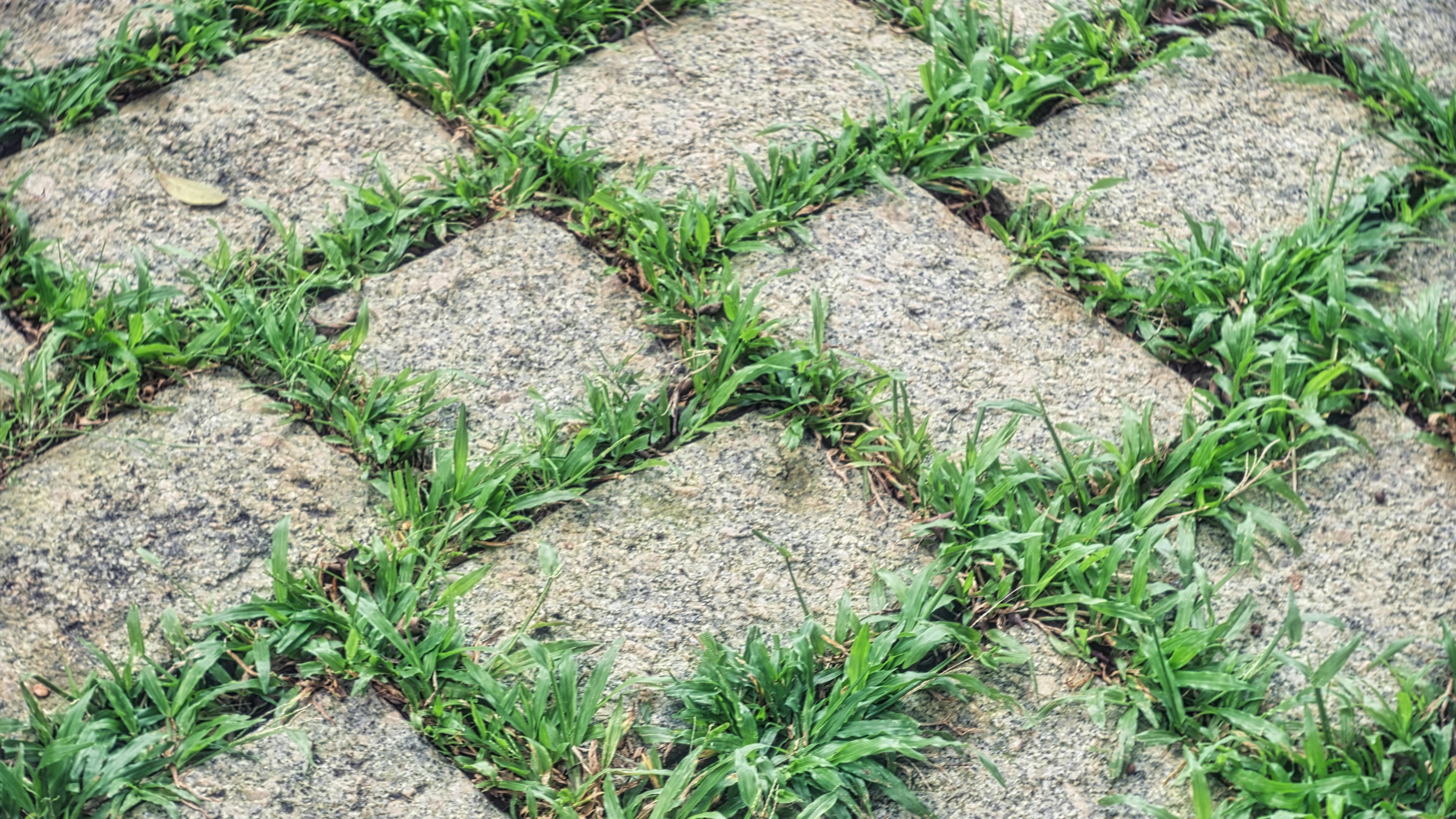
Permeable pavers in Knoxville are one of the smartest upgrades we install for homeowners who are tired of puddles, runoff, and muddy edges after a hard East Tennessee rain. Instead of forcing water to sheet across your driveway or patio and into the street, permeable systems are designed to let water pass through the surface and into a stone base below. Done right, they can reduce stormwater runoff, help with drainage in problem areas, and create a cleaner, safer outdoor space.
In this guide, we will walk you through how permeable pavers work in our local climate, where they make the most sense (driveways, patios, walkways), what you can expect for permeable paver driveway cost in the Knoxville area, and the real maintenance expectations compared to standard pavers. We will also share the situations where we do not recommend them, because the best hardscape is the one that fits your property, soil, and budget.
How permeable pavers work (and why Knoxville rain changes the conversation)
Permeable pavers are not just pavers with wider joints. A true permeable paver system is a layered assembly that manages water from the top down.
Here is the basic anatomy we use when we design for paver drainage in East Tennessee:
- Permeable pavers (concrete or clay units) that create the finished surface.
- Open-graded joint stone (small, clean aggregate) that keeps joints stable while leaving voids for water.
- Bedding layer of clean, angular stone (not masonry sand) so water can move vertically.
- Open-graded base reservoir (larger clean stone) that stores water temporarily.
- Geotextile or separation fabric in specific conditions to keep fines from migrating into the base.
- Optional underdrain (a perforated pipe) when soils are slow-draining or when we need to direct overflow to a safe discharge point.
What happens during a typical East Tennessee downpour
Knoxville and the surrounding area can get intense, short-duration storms. In neighborhoods with clay-heavy soil, water often cannot soak in fast enough, so it runs across hard surfaces and collects at the lowest point. With permeable pavers, rainfall hits the surface, drops through the joints, and is stored in the stone base until it infiltrates into the subgrade or is carried away by an underdrain.
In practical terms, that can mean:
- Less standing water at the bottom of a driveway.
- Fewer icy patches in winter cold snaps because water is not pooling on the surface.
- Reduced erosion at the edges of patios and walkways where runoff used to spill over.
Permeable vs regular pavers: the core difference
Standard pavers typically use polymeric sand or tight joints over a compacted base designed to shed water. They can still drain some through the joints, but the system is not built to store and manage water.
When homeowners ask us about permeable vs regular pavers, we frame it like this:
- Regular pavers are a great choice when you want durability, repairability, and a classic look, and you already have a solid drainage plan.
- Permeable pavers are ideal when drainage is part of the problem you are trying to solve, especially in areas where runoff currently causes puddling, washouts, or water moving toward the house.
Where permeable pavers make sense in Knoxville (driveways, patios, walkways)
Not every project needs a permeable system. We recommend them when the site conditions and the homeowner’s goals line up.
Permeable paver driveways
- The existing driveway sheds water toward the garage, sidewalk, or a low spot.
- You have limited yard area for surface drainage features.
- You want to reduce runoff to the street or keep water from cutting ruts along the driveway edge.
Driveways also bring extra design considerations. We look closely at:
- Traffic loads (daily vehicles, turning movements, delivery trucks).
- Base thickness and compaction standards.
- Edge restraints and transitions to garage slabs or roadway.
If you are exploring driveway or patio options, our Hardscaping team can help you compare systems based on your lot, not just a brochure.
Permeable patio pavers
Permeable patio pavers are a great solution when the patio sits near a walkout basement, pool deck area, or any place where runoff currently pushes toward the home.
We often see patios in our region built too flat or with the wrong base, which leads to water lingering at the surface. A permeable system can add forgiveness during heavy rain, but it still needs correct slope and detailing.
For homeowners who are still deciding between hardscape surfaces, you may also want to read Paver Patio vs. Concrete Patio in Knoxville: What’s Best? because it covers durability, repairability, and performance in freeze-thaw cycles.
Walkways and side-yard paths
Walkways are one of the best places to use permeable pavers because:
- They are smaller areas, so cost stays manageable.
- They often run through shaded side yards where water and moss can be an issue.
- They connect downspouts, gates, and utility areas where foot traffic compacts soil.
If you have a muddy side-yard that never seems to dry, permeable pavers can help, but we also look at downspout discharge and grading. In some cases, a drain system is the better first step. Our guide Catch Basin vs Trench Drain: Outdoor Drainage 101 for East Tennessee explains how those options compare.
Pros of permeable pavers in East Tennessee
When permeable pavers are designed and installed correctly, they bring benefits that go beyond “better drainage.”
1) Reduced puddling and improved surface safety
The most immediate benefit is fewer puddles. That matters for:
- Driveways where puddles splash vehicles and track mud.
- Patios where standing water makes furniture legs sink and encourages algae.
- Walkways where slick spots become a slip hazard.
2) A practical stormwater runoff solution for tight lots
Many Knoxville neighborhoods have tighter lots than older rural properties in Roane County or Loudon County. When you do not have room for big swales or broad grading changes, a permeable surface can reduce the amount of water that has to be managed above ground.
3) Better performance than “just add gravel” in high-use areas
Gravel can drain well, but it migrates, ruts, and needs frequent reshaping. Permeable pavers provide a stable, finished surface that still manages water.
4) Repairability and long-term flexibility
Like standard pavers, permeable pavers can be lifted and reinstalled if you ever need to access utilities or adjust a section. That is a major advantage over poured concrete.
5) Potential help with local drainage compliance (project-dependent)
Some projects, especially larger or more complex properties, may face stormwater considerations. While we are not a permitting authority, we do design with best practices in mind, and we can coordinate with engineers when needed. If you are building new or doing a major renovation, it is worth asking your local jurisdiction what applies to your site.
Cons and limitations (what we tell homeowners before they commit)
We like permeable systems, but we also know where they can disappoint if expectations are not realistic.
1) Higher upfront cost than standard pavers
- The base uses clean, open-graded stone that is more expensive than conventional base material.
- Excavation and hauling can increase because the base is often thicker.
- Installation is more specialized.
We break down typical price ranges in the next section.
2) Soil and site conditions matter
East Tennessee has a lot of clay. Clay does not infiltrate as quickly as sandy soils, so some properties need an underdrain to move water out of the base reservoir during extended wet periods.
Also, if groundwater is high or the area stays saturated, permeable pavers may not perform as intended without additional drainage design.
3) Maintenance is different, not zero
Permeable pavers require maintenance to keep the joints open. If joints clog with fines, pollen, or decomposing leaves, the surface infiltration rate drops.
4) Not ideal for every slope or runoff pattern
If a driveway is steep, water may move across the surface faster than it can infiltrate. In those cases, we may recommend a hybrid approach, such as permeable sections combined with strategic drains.
Permeable paver driveway cost in Knoxville: typical ranges and what drives pricing
Homeowners usually want a real number, not a vague “it depends.” We cannot quote your exact project without seeing the site in Knoxville, Kingston, Lenoir City, or the surrounding area, but we can share realistic ranges we commonly see for professionally installed work.
Typical installed price ranges (Knoxville area)
For most residential projects, permeable pavers often land in these ranges:
- Permeable paver patio pavers: roughly $18 to $35 per square foot installed
- Permeable paver driveways: roughly $22 to $40+ per square foot installed
- Walkways: often $20 to $40 per square foot installed due to edges, curves, and mobilization
These are broad ranges because design, access, and base requirements can swing the final price.
What changes the price the most
When we estimate permeable paver driveway cost, these are the biggest variables:
- Excavation depth and base thickness
- A deeper stone reservoir costs more in material and hauling.
- Soil conditions and need for an underdrain
- Clay soil or slow infiltration can require an underdrain tied into a safe outlet.
- Site access
- Tight backyards, fences, or limited driveway access increase labor and equipment time.
- Edge restraints and transitions
- Garage apron details, street tie-ins, and retaining edges add complexity.
- Pattern, paver style, and borders
- Premium pavers, complex patterns, and contrasting borders increase labor.
- Drainage coordination
- Sometimes permeable pavers are part of a larger drainage plan that includes grading, downspout routing, or drains.
If you are in Knoxville or nearby communities like Lenoir City and want a clear budget range for your property, we can walk the site and recommend options that fit your goals.
Installation details that matter for performance in East Tennessee
The difference between a permeable patio that works for years and one that clogs or settles usually comes down to base prep and detailing.
Base prep and compaction standards
Permeable systems still need a stable, well-compacted base. The compaction approach is different because the stone is open-graded, but it still must be installed in lifts and compacted properly.
We also pay close attention to:
- Separation fabric placement (only where appropriate).
- Keeping fines out of the base during construction. Mud contamination is one of the fastest ways to reduce performance.
If you want to understand why base construction matters so much in our climate, see Paver Patio Base in East TN: Depth, Stone & Compaction Tips.
Managing overflow during extreme storms
Even well-designed permeable systems have an overflow plan. In very heavy rain, the base reservoir can fill faster than it drains. We design for that by:
- Setting final grades so overflow moves away from the home.
- Using underdrains when infiltration is slow.
- Tying into existing drainage features when available.
Freeze-thaw and winter performance
Knoxville gets freeze-thaw cycles that can stress hardscapes. Permeable pavers can actually help reduce surface ice because water is less likely to pond. However, winter maintenance matters.
We recommend:
- Using calcium magnesium acetate (CMA) or other paver-safe deicers when possible.
- Avoiding excessive rock salt, which can contribute to surface scaling over time.
- Keeping joints properly filled so pavers stay locked.
Maintenance expectations vs standard pavers
Permeable systems are not “install it and forget it,” especially under trees or in areas with lots of windblown sediment.
What maintenance looks like for permeable pavers
Most homeowners do well with a simple routine:
- Blow off leaves and debris regularly, especially in fall.
- Vacuum sweep (or have a contractor vacuum) periodically to remove fine sediment from joints.
- Top up joint stone as needed if it migrates or is removed during cleaning.
- Watch for clogging in high-sediment zones like driveway edges near mulch beds.
In our experience, the properties that struggle most are the ones where:
- Mulch washes onto the pavers.
- Soil is bare uphill and erodes onto the surface.
- Downspouts dump directly onto the pavers without splash control.
If you want a broader year-round checklist for keeping outdoor surfaces in good shape, our post Outdoor Living Space Maintenance in Knoxville: Year-Round Guide is a solid companion.
Standard pavers: simpler joints, different concerns
Standard pavers with polymeric sand generally need:
- Occasional joint touch-ups after pressure washing.
- Weed control at edges.
- Cleaning for algae or mildew in shade.
Permeable pavers trade some of that for a drainage benefit. The right choice depends on whether drainage is a top priority.
Should you seal permeable pavers?
Sealing is a nuanced topic in our humid climate. Sealer can change traction, appearance, and how joints behave. With permeable systems, we are cautious because some sealers can reduce infiltration if applied incorrectly.
If you are considering sealing, read Paver Sealing in East Tennessee: Do You Need It (Really)? and plan to discuss product selection and application with your installer.
When we recommend alternatives to permeable pavers
Sometimes the best solution is not permeable pavers, even if runoff is a concern.
We often recommend other approaches when:
- The area is constantly shaded and stays wet, and the real issue is grading or lack of sunlight.
- The site has significant slope, and you need a linear drain or regrading to control flow.
- You have heavy sediment sources uphill that will clog joints unless erosion is fixed first.
Alternatives we commonly discuss include:
- Targeted grading and swales
- Catch basins or trench drains
- French drains or dry creek beds
- Rain gardens for certain yard layouts
If you are comparing drainage strategies, our French Drain vs. Dry Creek Bed for East TN Drainage article can help you think through what fits your property.
Choosing the right contractor for permeable pavers in Knoxville
Because permeable pavers are a system, contractor experience matters. When you are vetting quotes, we suggest asking:
- What base materials are you using (open-graded stone vs sand and dense-grade base)?
- How deep will you excavate, and why?
- Are you planning for overflow, and where does excess water go?
- Will you include an underdrain if the soils are clay-heavy?
- What maintenance do you recommend, and how often?
At Rock Solid, we build permeable and standard paver systems with East Tennessee weather in mind, and we are upfront about tradeoffs. If your project also needs ongoing care, our Property Maintenance team can help keep the surrounding landscape, drainage inlets, and edges performing the way they should.
Conclusion: Are permeable pavers worth it for Knoxville homeowners?
Permeable pavers can be an excellent choice in Knoxville when your goal is to reduce puddling and runoff while still getting the durability and curb appeal of a true hardscape surface. The biggest advantages are better stormwater management and a drier, cleaner outdoor space. The biggest tradeoffs are higher upfront cost and the need for periodic maintenance to keep joints from clogging.
If you are considering permeable patio pavers or want a clearer permeable paver driveway cost range for your property, we can help you compare options based on your slope, soil, and drainage patterns. Learn more about our Hardscaping services, or reach out if you are in Roane County, Knoxville, or Oak Ridge and want a plan that works in real East Tennessee rain.


