

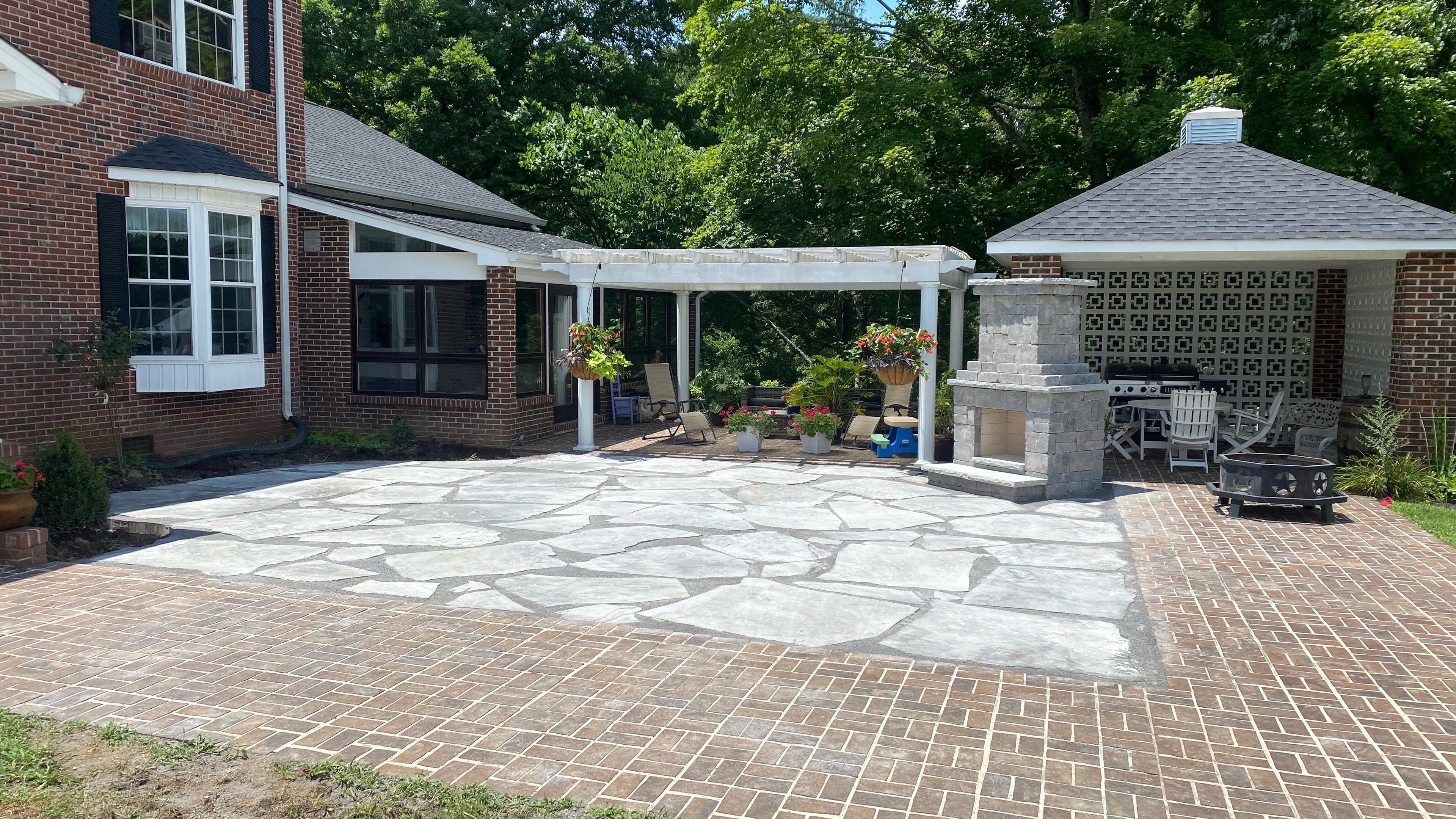
Planning a patio in East Tennessee is not just about picking a paver color. In Lenoir City, we see the same challenges show up again and again: strong afternoon sun, fast pop-up storms, roofline runoff that dumps water right where you want to sit, and clay soil that holds moisture longer than most homeowners expect. A great patio design works with those realities so your outdoor living space stays comfortable, drains correctly, and holds up year after year.
In this guide, we will walk you through practical patio design in Lenoir City, TN, including how to read sun exposure, plan patio drainage, set the right grades, create outdoor seating zones that feel natural, and choose materials that perform well in our climate. We will also share the same layout checks we use on real projects so you can avoid common mistakes before you spend money on construction.
If you are upgrading an existing slab or starting from scratch, these backyard patio layout ideas will help you plan with confidence and get better results.
Start with the site: sun, wind, and how you actually use the space
Before we talk pavers or pergolas, we start with a simple question: what do you want this patio to do on a normal day? In Lenoir City, “normal” might mean grilling after work in July heat, watching kids run in the yard, or hosting a fall football get-together when evenings cool off quickly.
Map sun exposure by time of day, not just “full sun” vs “shade”
For patio comfort, timing matters more than labels. A backyard that feels pleasant at 10 a.m. can be brutally hot at 5 p.m. because of western sun. Here is how we recommend homeowners evaluate sun exposure:
- Morning (8 to 11 a.m.): Usually the easiest time to use a patio, even in summer.
- Midday (11 a.m. to 2 p.m.): High sun angle, less shade from trees, surfaces heat up.
- Afternoon (2 to 7 p.m.): Often the hottest and brightest, especially with west-facing exposure.
Notice wind and storm direction
East Tennessee storms often roll through fast and can shift wind direction quickly. If your patio is exposed, smoke from a grill or fire pit can become an issue. We often design seating so the main conversation area is not directly downwind of cooking or fire features.
Confirm access and traffic flow
One of the most overlooked parts of backyard patio layout ideas is how people move.
- From the back door to the grill
- From the grill to the dining table
- From seating to the yard
- From the patio to a gate, driveway, or garden
If you have to squeeze between chairs to carry food, the patio will feel cramped even if it is technically “large enough.” When we design and build patios through our Hardscaping service, we plan these routes first, then build zones around them.
Patio drainage planning in Lenoir City: runoff, clay soil, and grading basics
Drainage is the difference between a patio you love and a patio you avoid. In Lenoir City, the combination of heavy rain events and clay soil means water management needs to be part of the design from day one.
Understand roofline runoff and downspout discharge
- Splashing and muddy edges
- Settling along the perimeter
- Erosion that undercuts the base
- Water that runs toward the foundation if grades are wrong
Before finalizing a layout, locate downspouts and watch where they discharge during a rain. If the downspout ends near the future patio, plan to route that water away with extensions, buried lines, or a designed drainage feature.
If you want to go deeper on drainage options that work well in our area, see our comparison of French Drain vs. Dry Creek Bed for East TN Drainage.
Plan slope intentionally (and keep it comfortable)
Patios need slope to shed water, but too much slope feels awkward for furniture and walking.
In most residential hardscape work, we aim for a subtle pitch away from the house so water does not sit or run toward the foundation. The key is consistency. A patio with low spots will puddle even if the overall slope is correct.
Practical tips we use on site:
- Avoid “flat” patios. Flat looks good on paper but rarely stays flat in real weather.
- Direct water to a safe exit. A slope without an outlet just moves puddles to a different spot.
- Think about where the water goes after the patio. You may need a swale, drain inlet, dry creek bed, or a rain garden area.
Account for clay soil and compaction
Clay holds water and can pump moisture up under hardscapes. That is why base preparation matters so much in East Tennessee. If you are considering pavers, base depth, stone selection, and compaction are not optional details.
We have a detailed guide on what “done right” looks like here: Paver Patio Base in East TN: Depth, Stone & Compaction Tips.
When drainage issues are bigger than the patio
Sometimes the patio is not the main issue. The yard may hold water, or runoff may be coming from a neighbor’s lot or a hillside. In those cases, we often recommend solving drainage first, then building the patio.
If you are seeing standing water in the broader yard, our article on How to Fix a Soggy Yard in Loudon Without Regrading Everything is a helpful starting point, even if you are in Lenoir City.
Patio shade solutions that actually work in East Tennessee
Shade is comfort, and in summer it can be the difference between using your patio daily or only in spring and fall. Patio shade solutions should be chosen based on sun direction, budget, and how you plan to use the space.
Option 1: Use the house strategically
If you are building a patio off the back door, the house can provide morning or late-day shade depending on orientation. The trick is to size the patio so the “main seating zone” lands where the shade falls when you want to use it.
Option 2: Pergolas and structures (good airflow, flexible coverage)
Pergolas are popular because they define an outdoor room without trapping heat. In our humid summers, airflow matters. You can increase shade by adding:
- Slats oriented to block the harshest sun angle
- Shade sails or fabric panels
- Climbing plants (with realistic expectations for growth and maintenance)
If you want full coverage, a roofed structure is a different category and may involve permitting and structural requirements depending on scope. We always recommend checking local requirements and HOA guidelines before committing.
Option 3: Trees as long-term shade (with root-smart placement)
Trees are excellent shade solutions, but they need planning. Roots and canopy size affect patios, walkways, and drainage over time. We have seen patios heave or edges lift where large roots were planted too close.
For species ideas and root-safe placement guidance, read Best Trees for East Tennessee Yards: Roots, Shade, and Clay.
Option 4: Umbrellas and movable shade (best for flexibility)
If you are not ready to build a structure, umbrellas are a practical first step. The most important detail is the base. A lightweight base will tip easily during summer storms.
We often recommend planning a dedicated “umbrella spot” in the layout so the shade hits the seating zone, not the walking path.
Outdoor seating zones: how to lay out dining, lounging, and cooking areas
When homeowners ask us for “a bigger patio,” what they usually want is a patio that functions better. The secret is zoning. Clear outdoor seating zones make the space feel organized and comfortable.
Zone 1: Dining
Dining needs enough room to pull chairs out without hitting a wall, railing, or landscaping bed. A practical layout rule is to allow walking space behind chairs so people can get up without everyone shifting.
Dining tips we use often:
- Place dining closer to the house for easy kitchen access.
- Keep dining out of the main runoff path from downspouts.
- If you want overhead shade, dining is the zone that benefits most.
Zone 2: Lounge and conversation
This is where you will spend the most time, so prioritize comfort.
- Face seating toward the view, not toward the back of the house.
- If you plan a fire feature, position seating so smoke does not blow directly into the main area.
- Consider a low wall or planting bed edge as a visual boundary.
Zone 3: Cooking and serving
Grills and outdoor kitchens need clearance, ventilation, and a safe surface.
- Keep the grill landing stable and level.
- Avoid placing grills where grease or smoke will stain siding.
- Plan a short path to the dining zone so you are not weaving through furniture.
If you are thinking about expanding beyond a grill pad, our article Outdoor Kitchen Ideas for Knoxville Homes (Budget to Luxury) can help you think through utilities, layouts, and durable finishes.
Zone 4: Circulation paths
This is the “invisible zone” that makes everything else work. We like to keep circulation clear and direct so guests naturally move through the space without bottlenecks.
Material selection for comfort and longevity in East Tennessee
Material choice affects heat, maintenance, traction, and long-term repairability. In Lenoir City, we also consider humidity, algae growth in shaded areas, and freeze-thaw cycles that can stress poorly built surfaces.
Concrete: simple and cost-effective, but plan joints and drainage
Concrete can be a solid option for many homeowners. The keys are proper base prep, control joints, and correct slope. If water sits on concrete, it can discolor and become slippery with algae in shaded spots.
Pavers: repairable and great for drainage when built correctly
Pavers are popular for good reason. Individual units can be replaced if stained or damaged, and the system can flex slightly with minor ground movement. However, pavers only perform as well as the base.
If you want a detailed comparison of surfaces, read Paver Patio vs. Concrete Patio in Knoxville: What’s Best?.
If you choose pavers, consider long-term care. Sealing can help with stains, but it is not always necessary and it needs to be done correctly in our climate. Here is our take: Paver Sealing in East Tennessee: Do You Need It (Really)?.
Natural stone: premium look, but pay attention to thickness and setting method
Stone patios can be beautiful and timeless. In East Tennessee, we pay close attention to:
- Stone thickness and quality
- How the stone is set (and what the base is)
- Surface texture for slip resistance
Some stones stay cooler underfoot than others, which matters if you have kids or pets.
Gravel and mixed materials: great for budget and drainage, with tradeoffs
Gravel patios can drain well and cost less, but they require edging, periodic top-off, and weed control. They are also not ideal for some furniture types.
If you are weighing options for adjacent paths and access points, our guide Gravel vs Pavers for East TN Walkways: Pros, Cons, Costs can help.
Putting it together: a practical planning checklist we use on patio projects
If you want to plan patio design in Lenoir City, TN like a pro, work through this checklist before you finalize a layout or request quotes.
1) Define your “primary use time”
Write down when you will use the patio most.
- Weekday evenings
- Weekend mornings
- Late-night hangouts
This determines where shade is most important and where lighting may matter.
2) Mark fixed constraints
These are items that affect layout immediately:
- Back door location and steps
- HVAC units, hose bibs, and utility lines
- Downspouts and roof valleys
- Property lines and easements
3) Decide your zones and rough sizes
Sketch zones with approximate dimensions:
- Dining zone
- Lounge zone
- Grill zone
- Walkways
Even a simple sketch helps prevent the classic mistake of building a patio that looks big but feels tight.
4) Choose your drainage path
Identify where water will go:
- Off the patio surface
- Away from the foundation
- Into a safe discharge area
If your yard already struggles with runoff, consider addressing it as part of the project. Our Property Maintenance team also helps homeowners keep drainage features and surrounding landscape performing over time.
5) Select materials based on real conditions
Ask these questions:
- Does this area stay shaded and damp?
- Will algae or leaf litter be an issue?
- Do we need a more slip-resistant surface?
- How important is repairability?
6) Plan the “edges” as carefully as the center
Edges are where patios fail first. We pay close attention to:
- Proper restraints for pavers
- Transitions to lawn or beds
- Steps if the yard slopes
If your yard has grade changes, steps and landings should be designed with the same care as the patio itself.
Why local experience matters for Lenoir City outdoor living
Lenoir City sits in a part of East Tennessee where weather swings are real. We can get heavy rain, hot humid stretches, and winter freeze-thaw cycles that expose shortcuts in base prep and grading. We also see lots with subtle slopes that look flat until water starts moving.
As a Kingston-based company, we work throughout the area and design for these conditions every day. If you are in Lenoir City and want a patio that stays comfortable and drains correctly, local planning makes a difference.
Our approach is to treat patios as part of a whole outdoor system, grading, drainage, hardscape structure, and surrounding planting. That is why many homeowners pair patio work with our Landscaping service to soften edges, add privacy, and create a finished outdoor room.
Conclusion: a patio that feels good starts with shade, drainage, and smart zones
The best Lenoir City patio design is not about trends. It is about getting the fundamentals right for East Tennessee: plan sun exposure and patio shade solutions for the hours you will actually use the space, handle roofline runoff and patio drainage planning before construction starts, and create outdoor seating zones that make hosting and everyday life easier.
If you want help translating these ideas into a build-ready plan, we can walk your site, talk through layout options, and recommend materials that fit your goals and budget. Explore our Hardscaping services, or reach out through our Lenoir City page at Lenoir City to schedule a consultation.


