

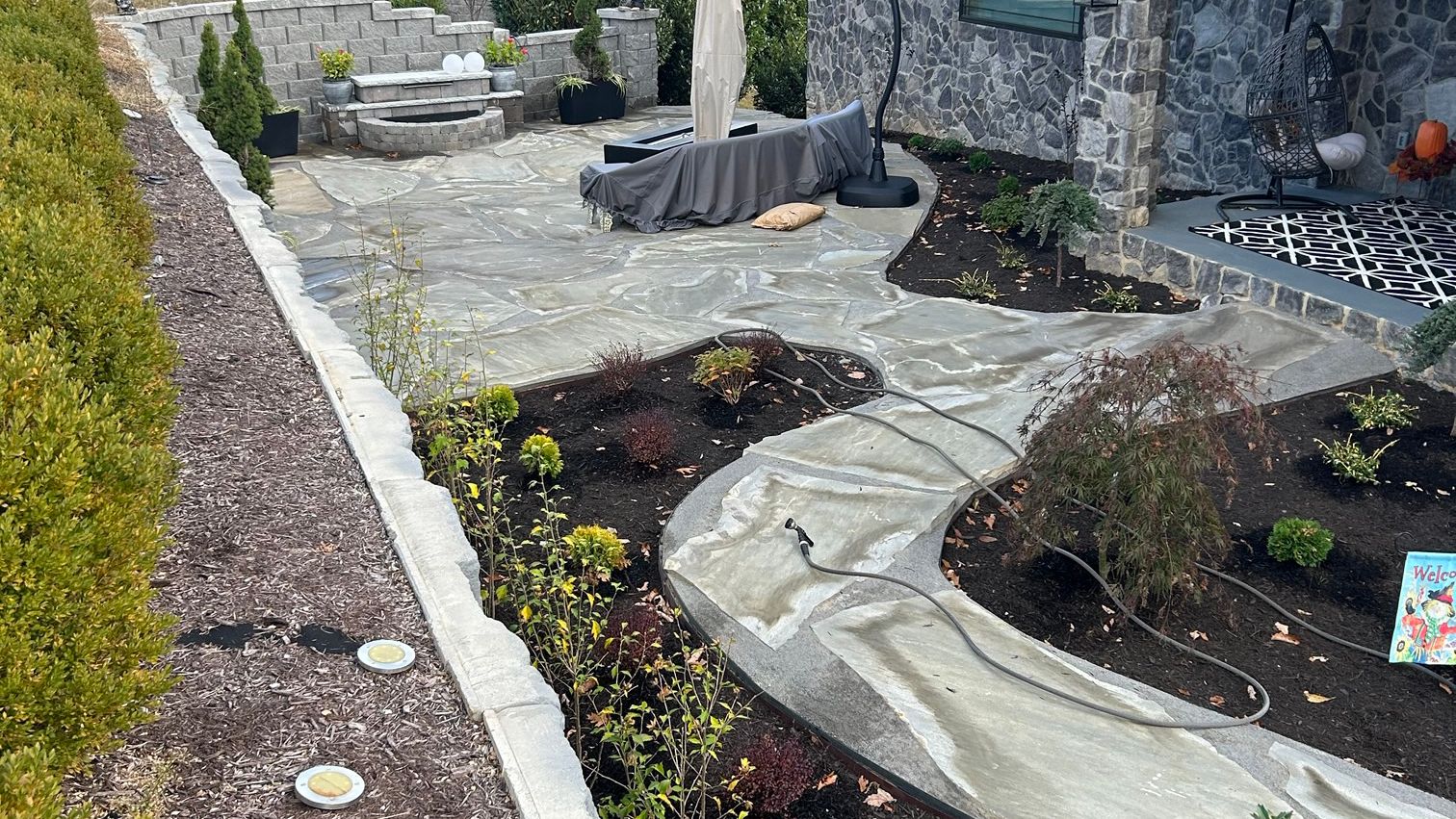
Retaining wall vs regrading is one of the most common decisions we help homeowners make in Loudon when a sloped yard starts washing out, landscape beds collapse, or runoff cuts channels after a heavy East Tennessee rain. The right fix is not always the biggest project. It is the one that matches your slope, your soil, your water flow, and how you actually use the space.
In this guide, we will break down when regrading is enough, when a retaining wall is the safer long-term solution, and when a hybrid approach delivers the best result. We will also cover slope angle rules of thumb, drainage planning, access constraints, realistic budget ranges, and what ongoing maintenance looks like in Loudon’s clay-heavy soils.
Start with the real problem: erosion, runoff, or a failing slope?
“Erosion” gets used as a catch-all, but we see three different issues on Loudon properties, and each points to a different solution.
1) Surface erosion (sheet flow and rills)
This is the classic “my mulch keeps ending up in the driveway” problem. Water moves as a thin sheet across the surface, then forms small grooves (rills). In East Tennessee clay, that sheet flow can turn into a slick, fast-moving layer during downpours.
Surface erosion often responds well to yard grading options like minor regrading, better downspout routing, and slope-friendly planting. In many cases, we can stabilize the slope without building a wall.
2) Concentrated flow (gutters, valleys, and washouts)
If water is coming off a roof valley, a driveway edge, or a natural swale, it can carve a gully quickly. You might notice:
- A trench forming after storms
- Exposed roots
- Sediment collecting at the bottom of the hill
- A low spot that stays muddy
This is where landscape drainage planning matters as much as the grading itself. Sometimes regrading helps, but if the water has a strong “path,” you also need a way to intercept, slow, and safely discharge it.
If you are dealing with soggy zones plus slope runoff, this related guide can help you think through targeted fixes: How to Fix a Soggy Yard in Loudon Without Regrading Everything.
3) Structural slope failure (slumping soil and collapsing beds)
This is the more serious scenario. You may see:
- Soil bulging outward near the bottom of a slope
- Landscape timbers tilting
- Cracks in the ground near the top of the slope
- A bed that keeps sliding downhill no matter how often you re-mulch
When the soil mass is moving, simply spreading topsoil and seed is not slope stabilization. A properly designed retaining wall, often paired with drainage, may be the correct fix.
Retaining wall vs regrading: the simplest way to decide
When homeowners ask us “Which fixes erosion control in Loudon TN, a wall or regrading?” we start with five decision factors.
Factor 1: Slope angle and available “run”
General rules of thumb we use during site evaluations:
- If you can flatten the slope and still keep water draining away from the home, regrading may be viable.
- If flattening would push the slope into a neighbor’s yard, block access, or create drainage toward the foundation, a wall or terracing is often the better path.
In Loudon, we commonly see backyards that drop quickly toward a tree line or creek buffer. Those lots often do not have the horizontal space needed to regrade without losing usable yard.
Factor 2: Where the water is coming from
Regrading can reduce velocity by flattening and redirecting sheet flow. But if runoff is concentrated, you need a plan to collect and convey water.
- Correcting downspout discharge points
- Swales that move water across the yard without cutting channels
- Catch basins or trench drains in hardscape areas
- Rock-lined channels (dry creek beds) where flow is unavoidable
If you want to understand the drainage hardware side, this guide is a helpful companion: Catch Basin vs Trench Drain: Outdoor Drainage 101 for East Tennessee.
Factor 3: Soil type and compaction risk
East Tennessee soils vary, but in Loudon we frequently work in clay or clay-loam that:
- Seals over during heavy rain, increasing runoff
- Holds water longer, increasing pressure behind walls if drainage is poor
- Compacts easily under equipment, which can worsen drainage if handled incorrectly
Regrading is not just “moving dirt.” It is shaping, conditioning, and compacting to the right density, then stabilizing the surface with vegetation, erosion control matting, mulch, or stone where needed.
Factor 4: Access for equipment and material delivery
Access can make or break a project budget.
- Tight gates, septic fields, steep driveways, and fence lines can limit machinery.
- Retaining wall block or stone is heavy, and moving it to a backyard with limited access raises labor costs.
- Regrading also needs access, but it may require fewer pallets of material.
When we evaluate a property in Loudon, we look at the path from driveway to work zone and consider how that affects both timeline and cost.
Factor 5: Long-term maintenance and risk tolerance
Regrading usually has lower long-term structural risk, but it may require ongoing surface maintenance like:
- Overseeding thin areas
- Re-mulching slope beds
- Keeping downspouts and swales clear
Retaining walls, when built correctly with drainage and proper base prep, are durable. But when walls fail, repairs can be more disruptive and expensive than reseeding a slope. This is why details like base depth, backfill, and outlet placement are non-negotiable.
If you are considering a wall, we recommend reading this first: Retaining Wall Drainage: Gravel, Pipe and Weep Holes Explained.
When regrading is the best way to fix a sloped yard in Tennessee
Regrading is often the right answer when the yard needs a smoother, safer shape and the erosion is mostly surface-related.
Signs regrading will likely work
Regrading tends to be effective when:
- The slope is moderate and you have room to flatten it
- Water is flowing broadly across the surface, not cutting a deep channel
- There are low spots holding water that can be corrected with soil shaping
- You want a more usable lawn area and easier mowing
What “done right” regrading includes
To prevent hillside erosion long-term, regrading needs more than a skid steer and a bag of seed.
- Mapping water flow during or after rain (we look for roof discharge points, driveway runoff, and natural swales).
- Setting finish grades so water moves away from the home and does not pond near foundations.
- Soil conditioning (often adding topsoil or compost in thin, compacted areas).
- Compaction control so the surface is firm but not sealed like concrete.
- Stabilization using:
- Erosion control blanket on steeper faces
- Mulch and plantings in bed areas
- Sod or seed based on season and irrigation capacity
If you want a quick way to sanity check whether grading is overdue, this post is a strong starting point even though it is written for a nearby area: Kingston TN Yard Grading: Signs You Need Regrading.
Budget range for regrading in Loudon
Every property is different, but for planning purposes:
- Minor regrading and touch-ups: often starts in the low thousands
- Regrading a larger backyard with soil import, stabilization, and turf establishment: commonly lands in the mid to upper thousands
What changes the price most is soil volume, access, and how you plan to stabilize the finished slope.
When a retaining wall is the better erosion control solution
Signs a retaining wall is the safer choice
We typically recommend exploring a wall when:
- You need to “hold” grade because there is not enough room to flatten the slope
- A landscape bed repeatedly fails and slides downhill
- You want to create a level terrace for a patio, walkway, or play area
- The slope is steep enough that mowing is unsafe or impractical
- You see signs of soil movement, not just surface wash
In Loudon, we often build walls to reclaim functional yard space. A well-placed wall can turn a steep, wasted strip into a flat lawn panel, a planting terrace, or a hardscape zone.
If you want to see how material choice affects durability and cost in our climate, this is a helpful read: Retaining Wall Materials: Block vs Stone in East TN.
What makes a retaining wall actually work in East Tennessee
In our region, the biggest retaining wall problems come from water. Clay soils hold moisture, and heavy rain events can build pressure quickly.
- Proper base prep (excavation depth and compacted stone base)
- Drainage aggregate behind the wall
- Perforated drain pipe that outlets to daylight or a proper discharge point
- Filter fabric to reduce fines washing into the gravel
- Correct batter and reinforcement based on wall type and height
We also pay close attention to freeze-thaw cycles. Even in Loudon, winter temperature swings can cause movement if water is trapped behind the wall.
Budget range for retaining walls in Loudon
Retaining wall costs vary widely because height, engineering needs, access, and drainage complexity change everything.
Typical planning ranges:
- Small garden or bed walls: often start in the mid thousands
- Structural walls that hold significant grade: commonly move into the upper thousands to tens of thousands
If a wall is tall, near a driveway, or supporting a load (like a parking area), it may require engineering and permitting. Requirements vary by jurisdiction, setback, and height. We help homeowners understand what applies before construction begins.
If you are in nearby areas and want a sense of how permitting can come into play, this is worth reading: Retaining Wall Permits in Roane County: What to Know First.
For homeowners ready to explore professional installation, our Hardscaping team builds retaining walls with the drainage and base details that protect your investment.
The hybrid approach: regrading plus a wall (often the best of both)
Many Loudon erosion problems are not solved by choosing only one tool. A hybrid plan can reduce cost and improve performance.
Common hybrid layouts we install
Here are three real-world patterns we use to fix sloped yard Tennessee properties:
- Short retaining wall plus regraded upper slope
- A 2 to 3 foot wall holds the bottom edge.
- The upper portion is flattened so water slows down.
- The result is more usable space and less wall height.
- Terracing with two smaller walls
- Instead of one tall wall, we create two steps.
- Each wall holds less pressure.
- Planting pockets between terraces add root stabilization.
- Wall for grade control plus drainage feature for runoff
- A wall creates a flat zone.
- A swale, dry creek bed, or drain system handles concentrated flow.
This approach is especially effective when runoff is part of the problem. A wall without drainage planning can fail, and regrading without a way to move water can still wash out.
If you want deeper guidance on slope stabilization and clay performance, this related post pairs well with the hybrid concept: How to Stop Clay Soil Erosion on East TN Slopes.
Decision checklist for Loudon homeowners (slope, water, access, budget)
When you are comparing retaining wall vs regrading, use this checklist to clarify what you need before you collect quotes.
Slope and space
- How much vertical drop do you have, and over what distance?
- Do you need a flatter area for kids, pets, or entertaining?
- Would regrading eliminate too much yard space or push water toward the house?
Water flow and drainage
- Where does roof runoff discharge today?
- Does water cut a channel in one spot (concentrated flow) or wash broadly (sheet flow)?
- After a storm, where does sediment collect?
Site constraints
- Is there a septic field, utility easement, or tree root zone that limits excavation?
- Can equipment reach the work area without tearing up the yard?
- Are there property lines or fences that limit regrading?
Budget and value
- Are you looking for the lowest initial cost, or the best long-term fix?
- Would a wall increase usable space and property value enough to justify it?
- Are you prepared for ongoing lawn and bed maintenance if you choose regrading?
Maintenance expectations
- Regraded slopes need vegetation established quickly and maintained.
- Walls need periodic inspection of outlets, downspouts, and drainage paths.
If you want help with the ongoing side of keeping drainage paths clear, bed edges crisp, and plantings healthy, our Property Maintenance services can support the long-term performance of your erosion control plan.
How we approach erosion control in Loudon, TN (what to expect)
When we evaluate erosion control Loudon TN projects, we treat them like a system. Our goal is to stop soil loss, protect structures, and make the yard easier to live with.
Step 1: Site walk and water tracing
We look at:
- Roof lines and downspout discharge
- Driveway and sidewalk runoff patterns
- Low spots, soft zones, and existing swales
- Any signs of slope movement (cracking, bulging, leaning borders)
Step 2: Concept options with trade-offs
We typically present:
- A regrading-first option (when feasible)
- A retaining wall option (when grade must be held)
- A hybrid option (when both space and water management matter)
We also discuss how each option affects mowing, planting, and long-term maintenance.
Step 3: Build details that match East Tennessee conditions
Whether we are grading or building a wall, we plan for:
- Heavy rain events
- Clay soil behavior
- Freeze-thaw movement
- Safe discharge points that do not create new washouts
For homeowners in and around Loudon, our crews are nearby in Kingston, and we routinely serve Loudon and the surrounding communities.
If your project includes planting, bed rebuilding, or slope-friendly landscape design, our Landscaping team can integrate plant selection and layout that supports erosion control instead of fighting it.
Conclusion: choose the fix that controls water and stabilizes the slope
Retaining wall vs regrading is not a popularity contest, it is a site-specific decision. Regrading is often the most cost-effective way to fix a sloped yard in Tennessee when you have enough space to flatten the slope and you can stabilize the surface quickly. A retaining wall is usually the right choice when you need to hold grade, reclaim usable space, or address signs of slope movement. In many Loudon yards, a hybrid approach delivers the best balance of performance and budget by reducing wall height while improving drainage.
If you are ready to stop washouts and prevent hillside erosion for good, we can help you compare options with clear trade-offs and a plan that fits East Tennessee soils. Reach out to us through our Hardscaping or Landscaping services, and let’s build a solution that holds up season after season in Loudon.


